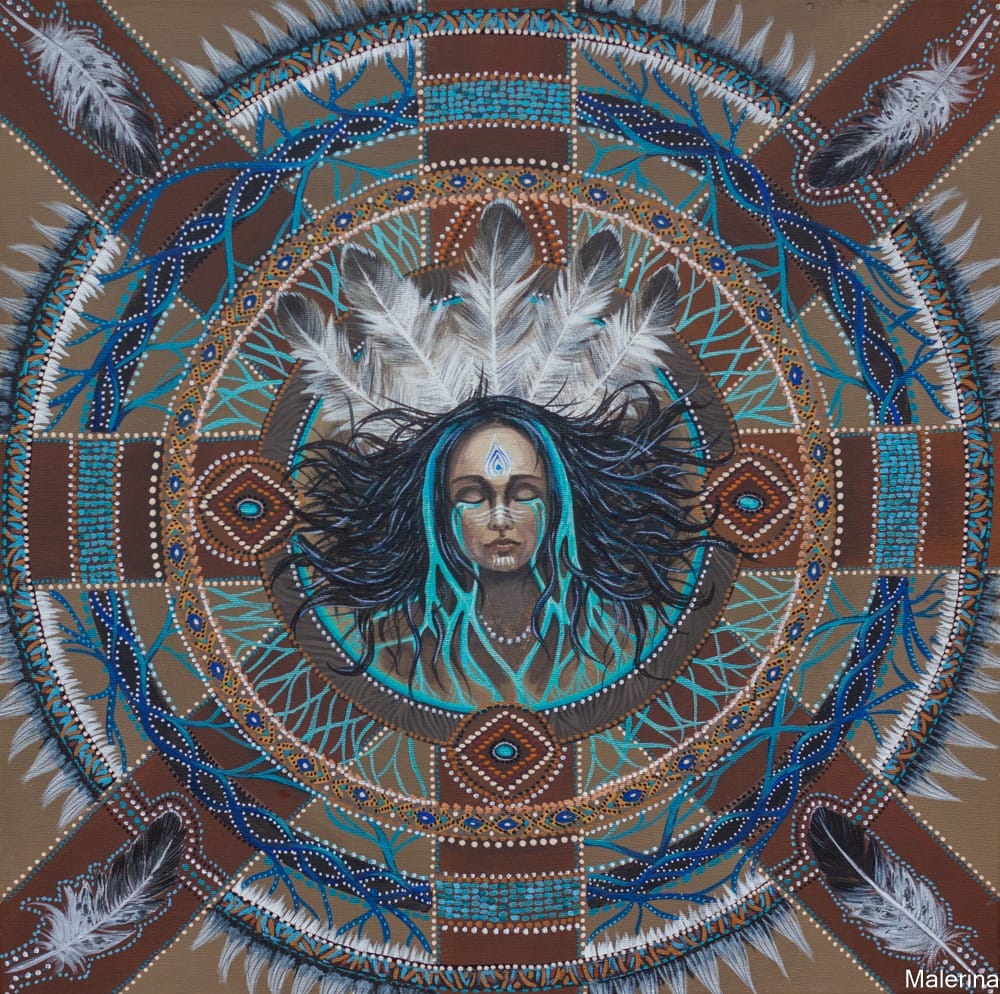
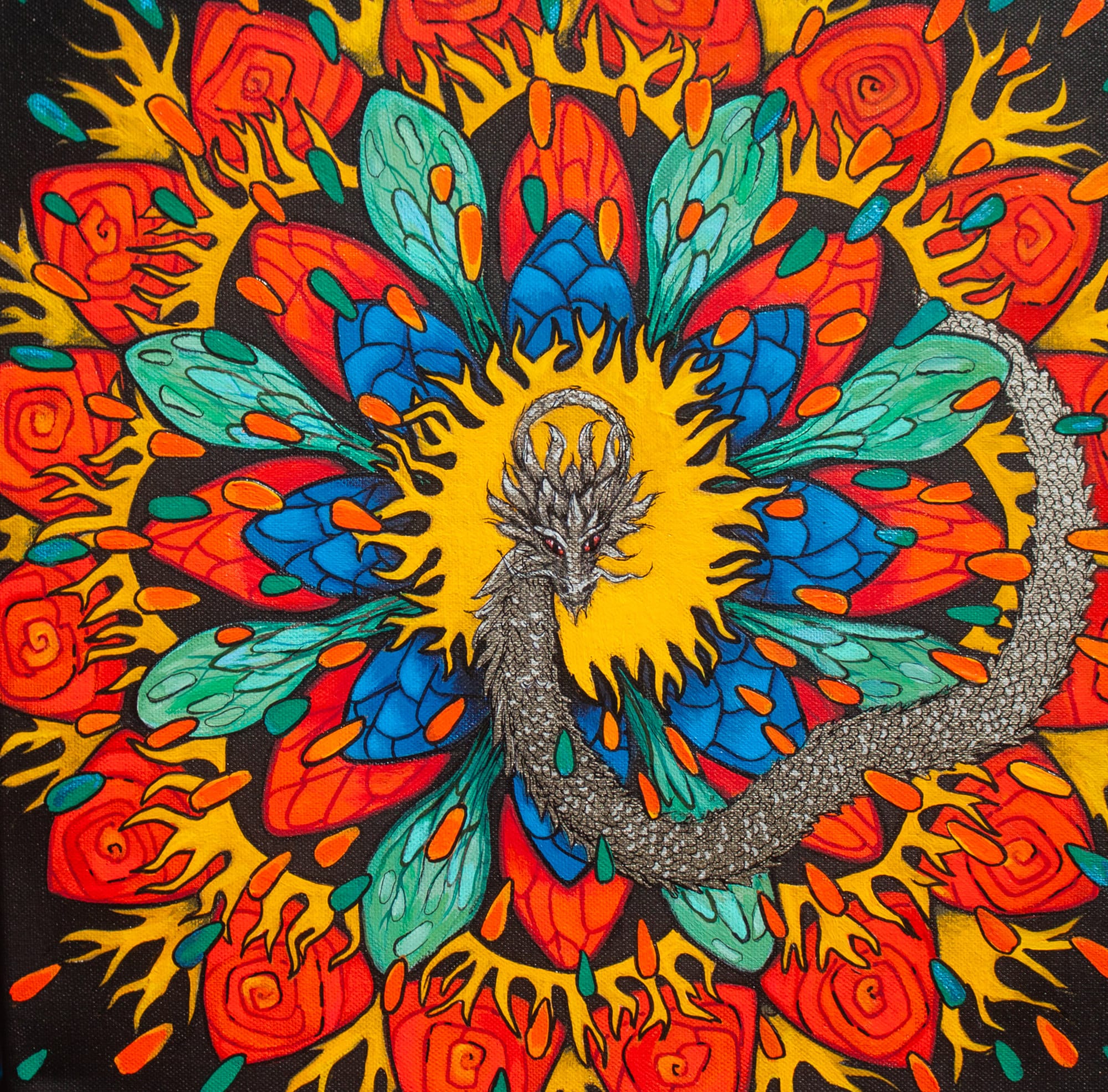
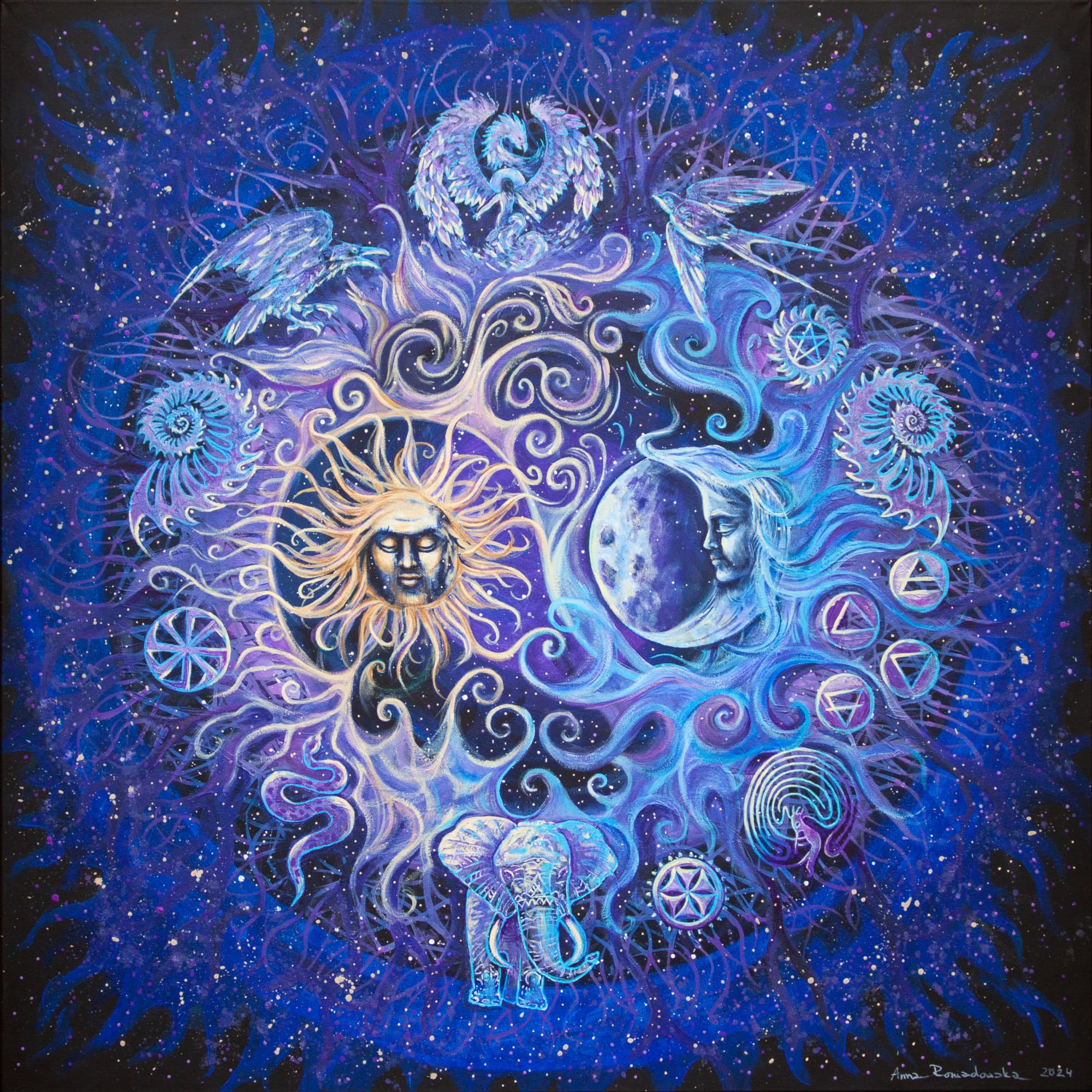
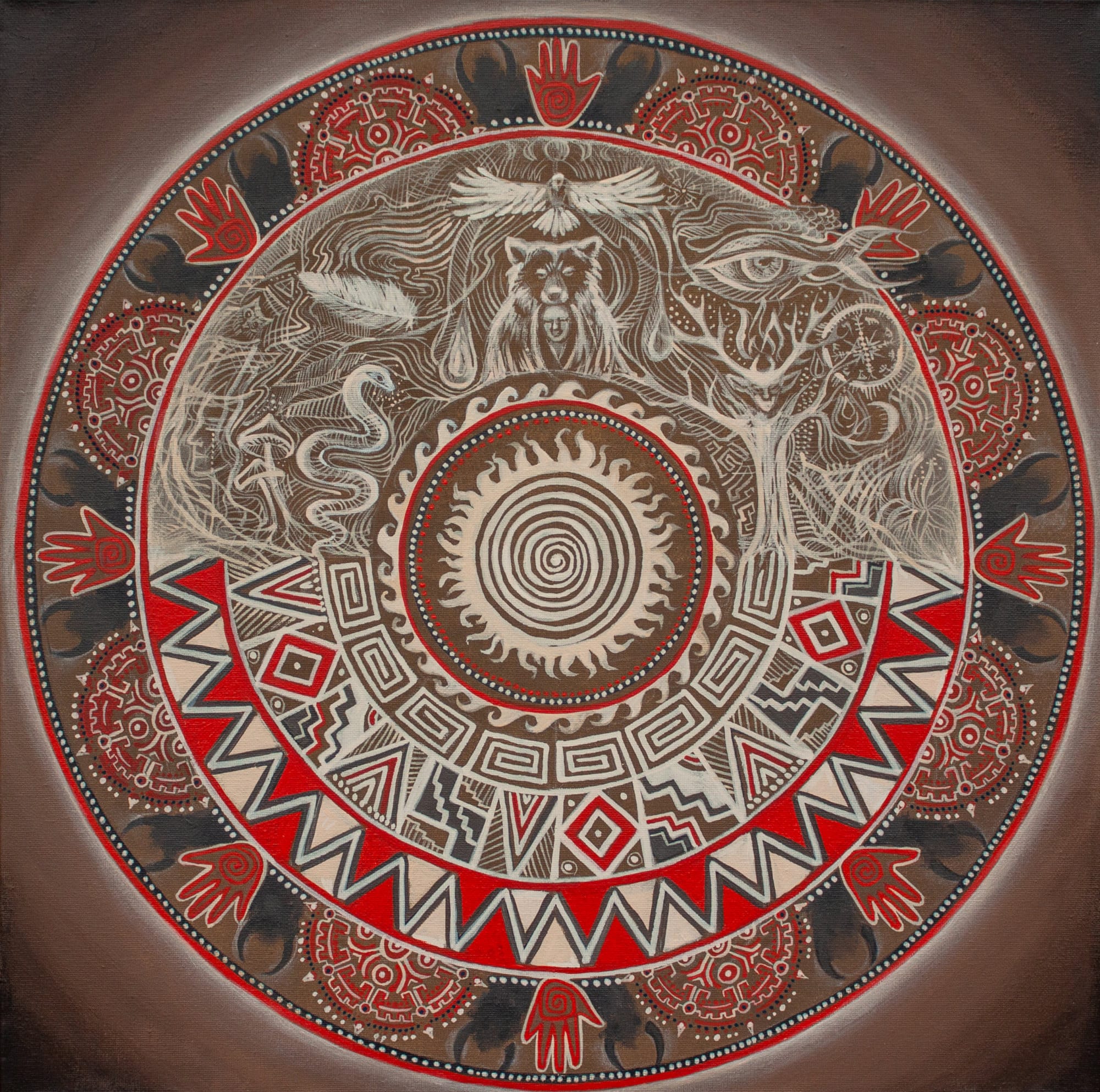
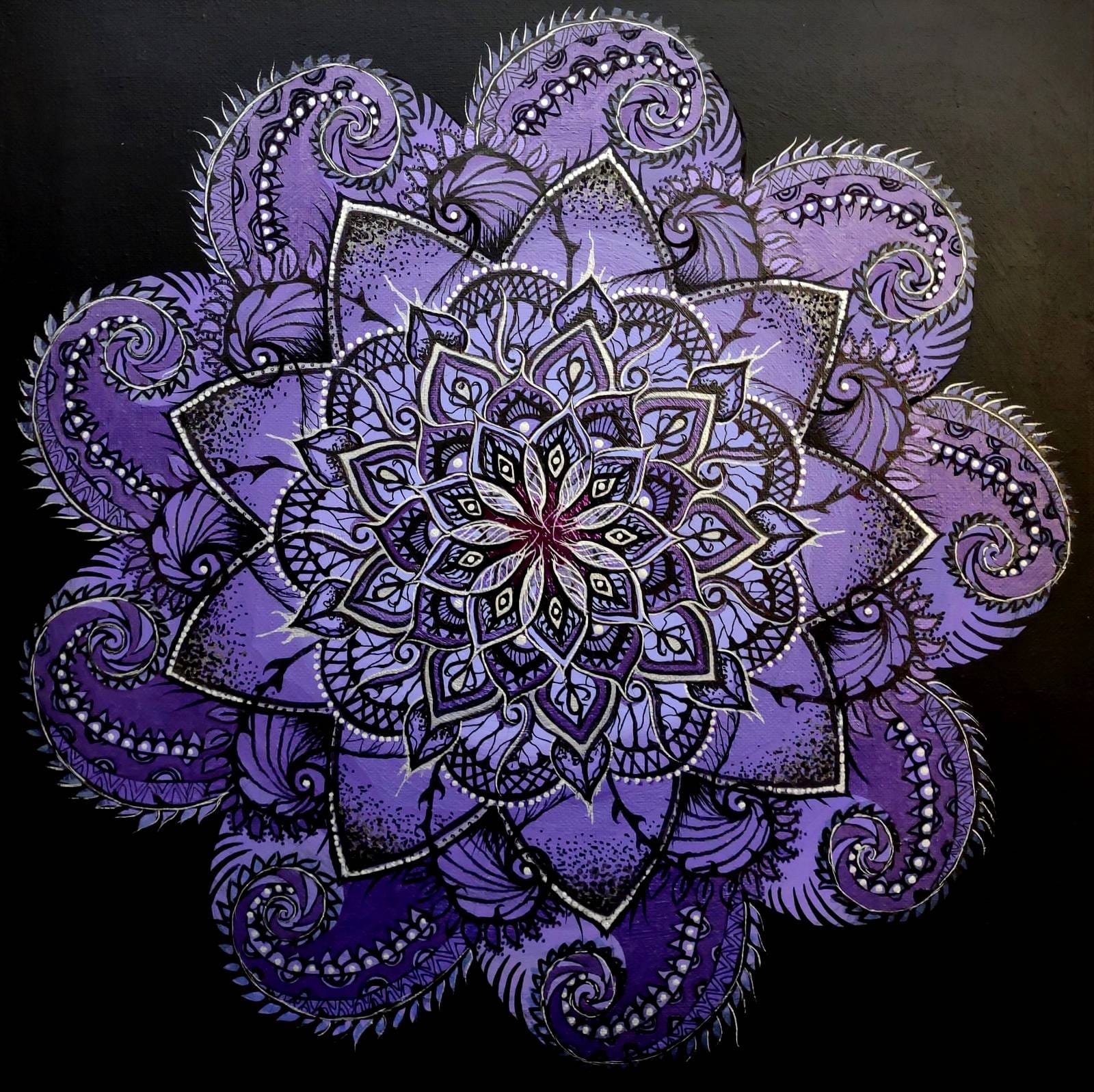
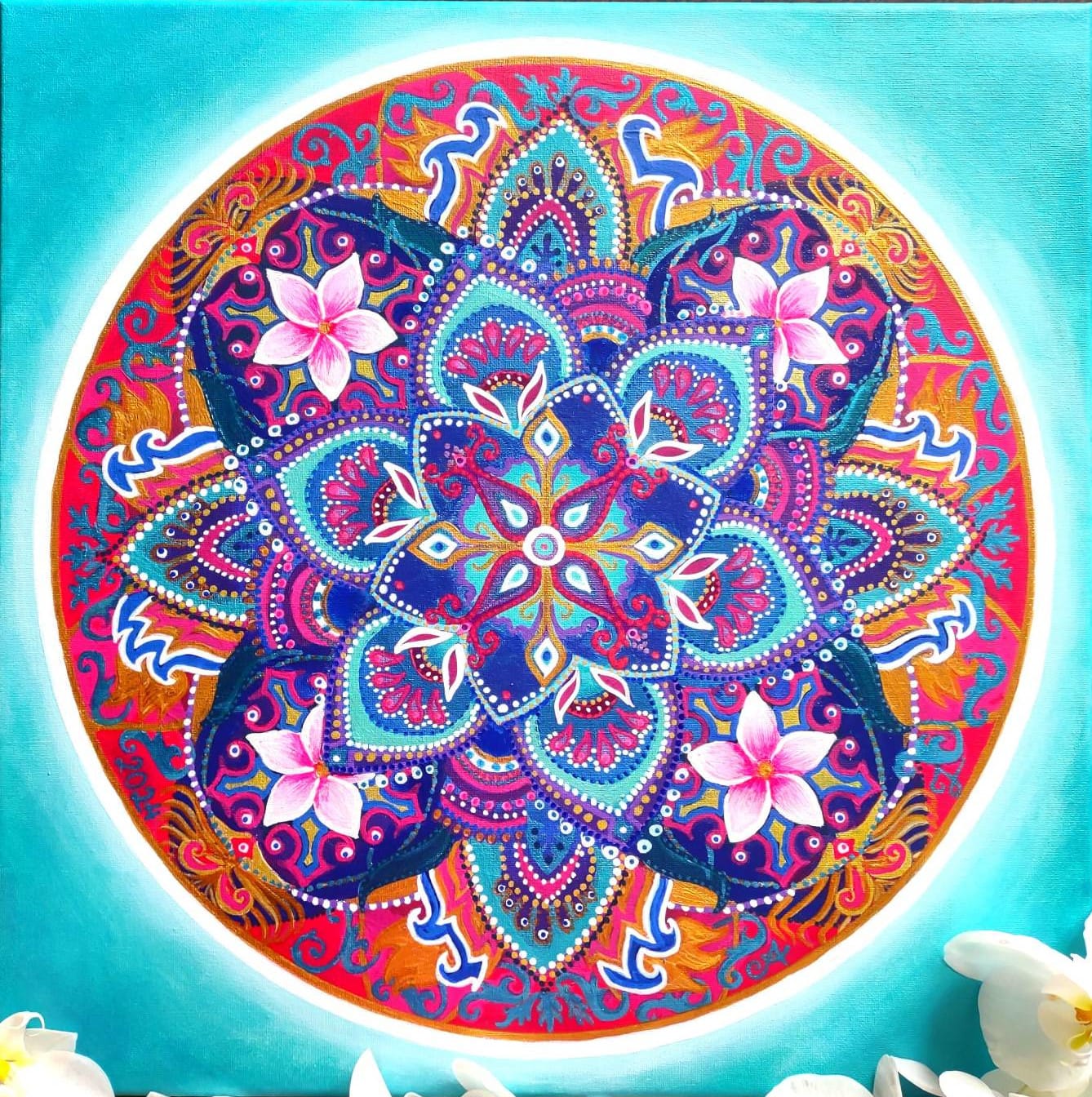
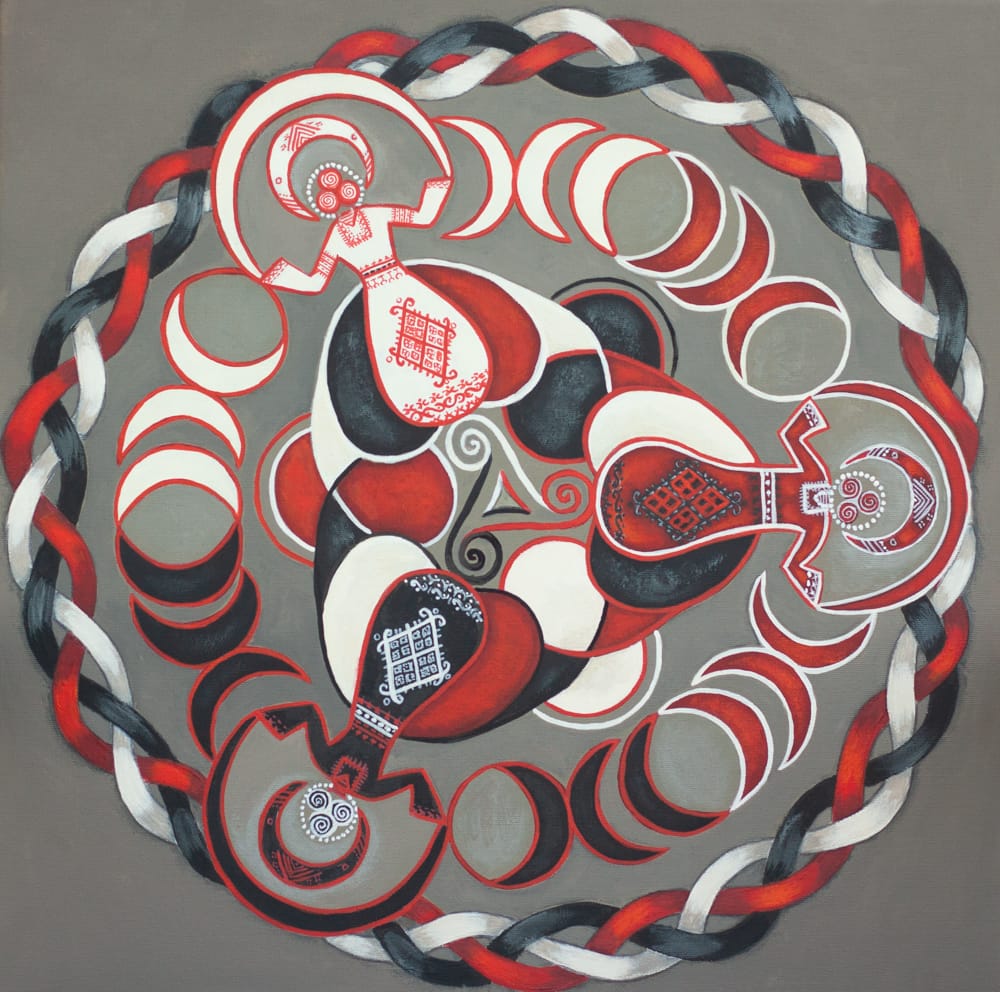
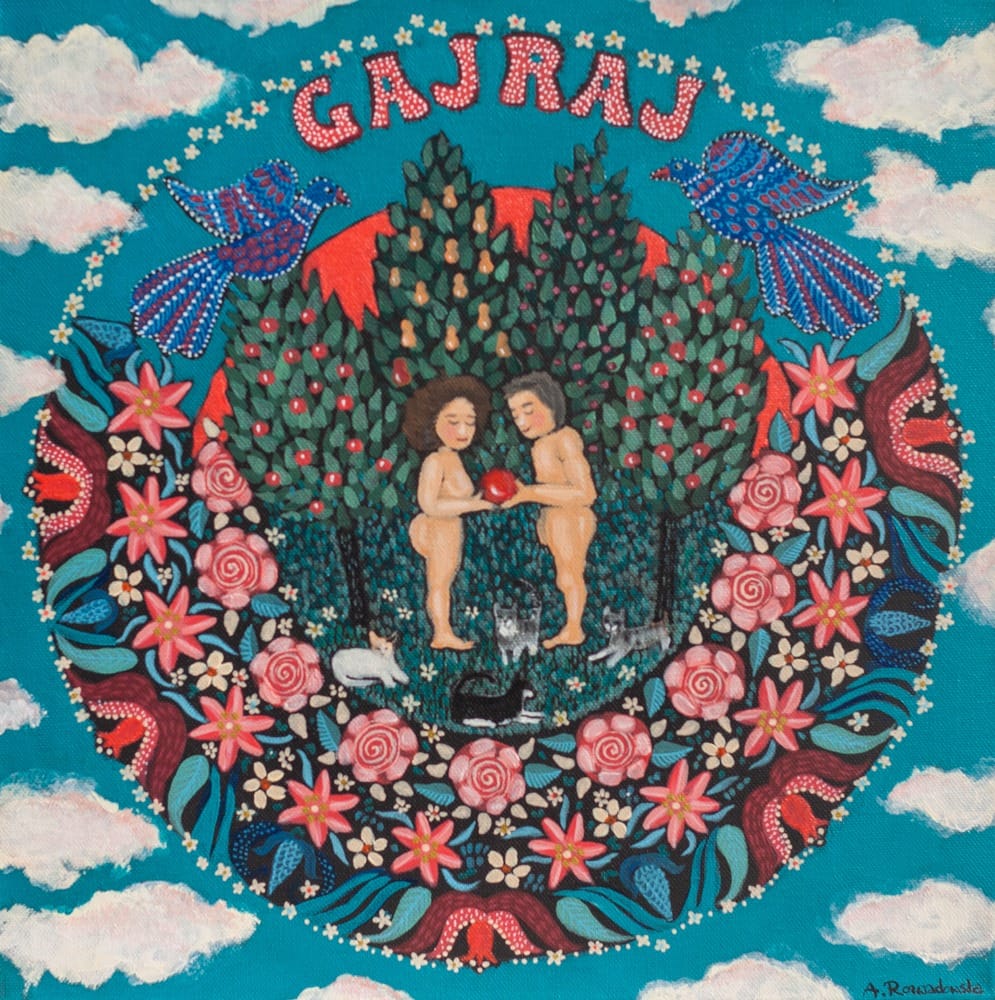
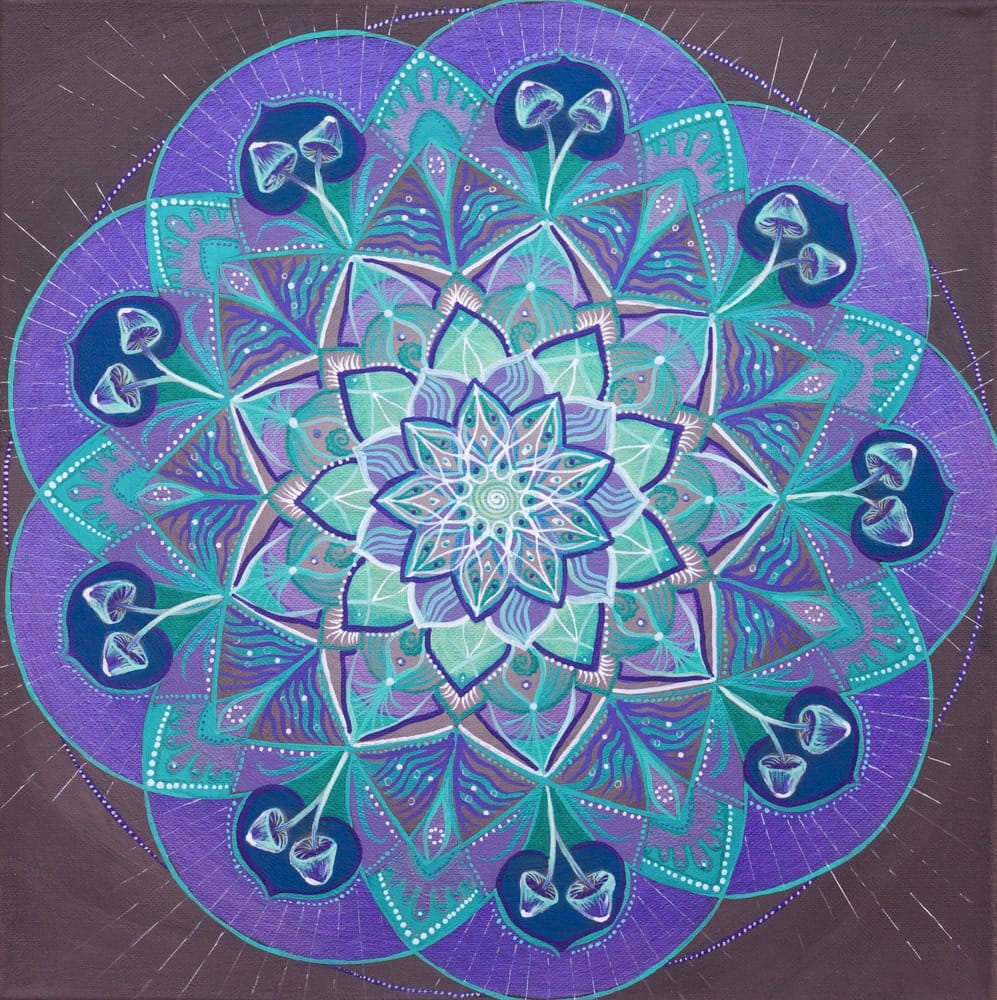
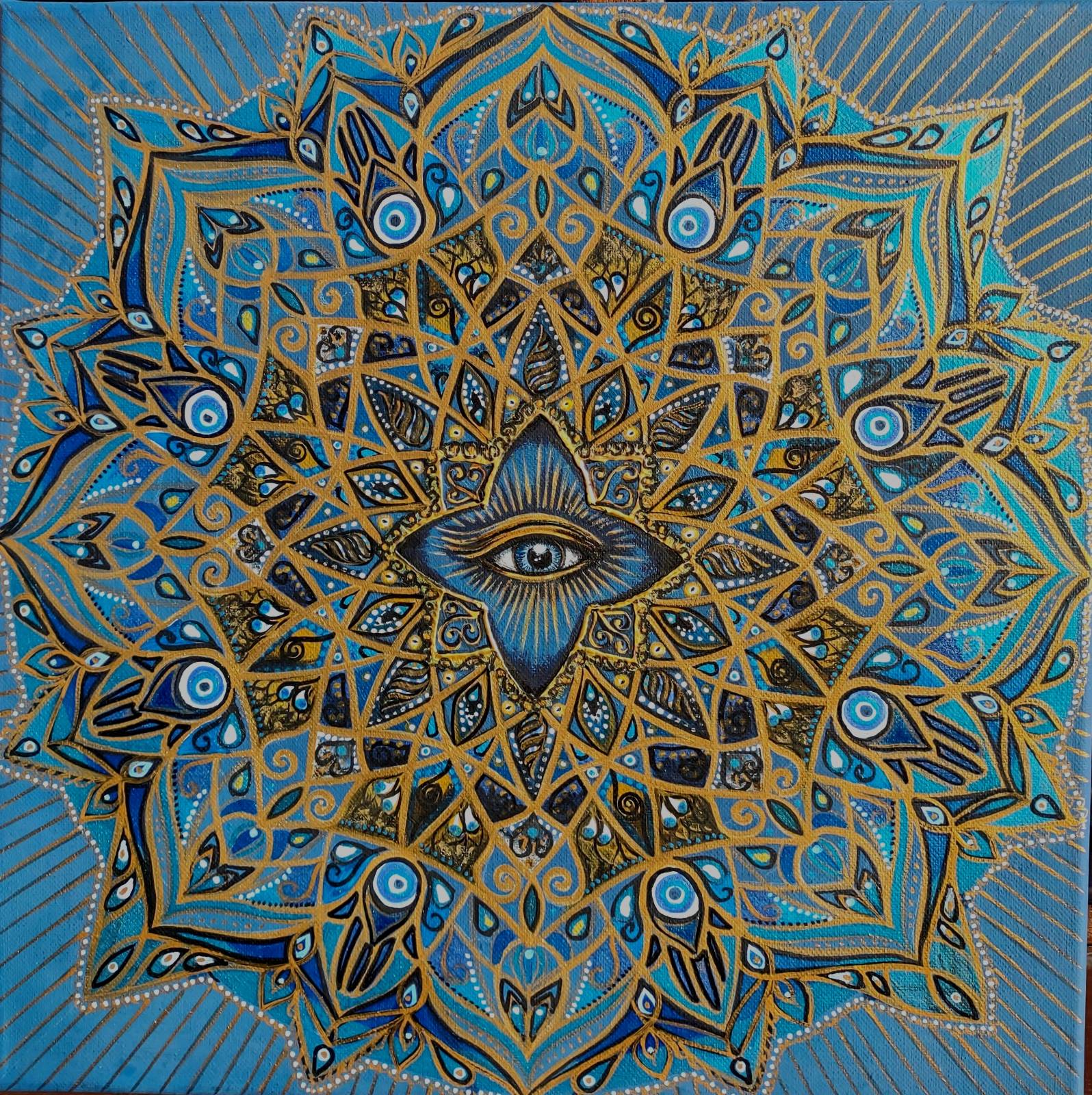
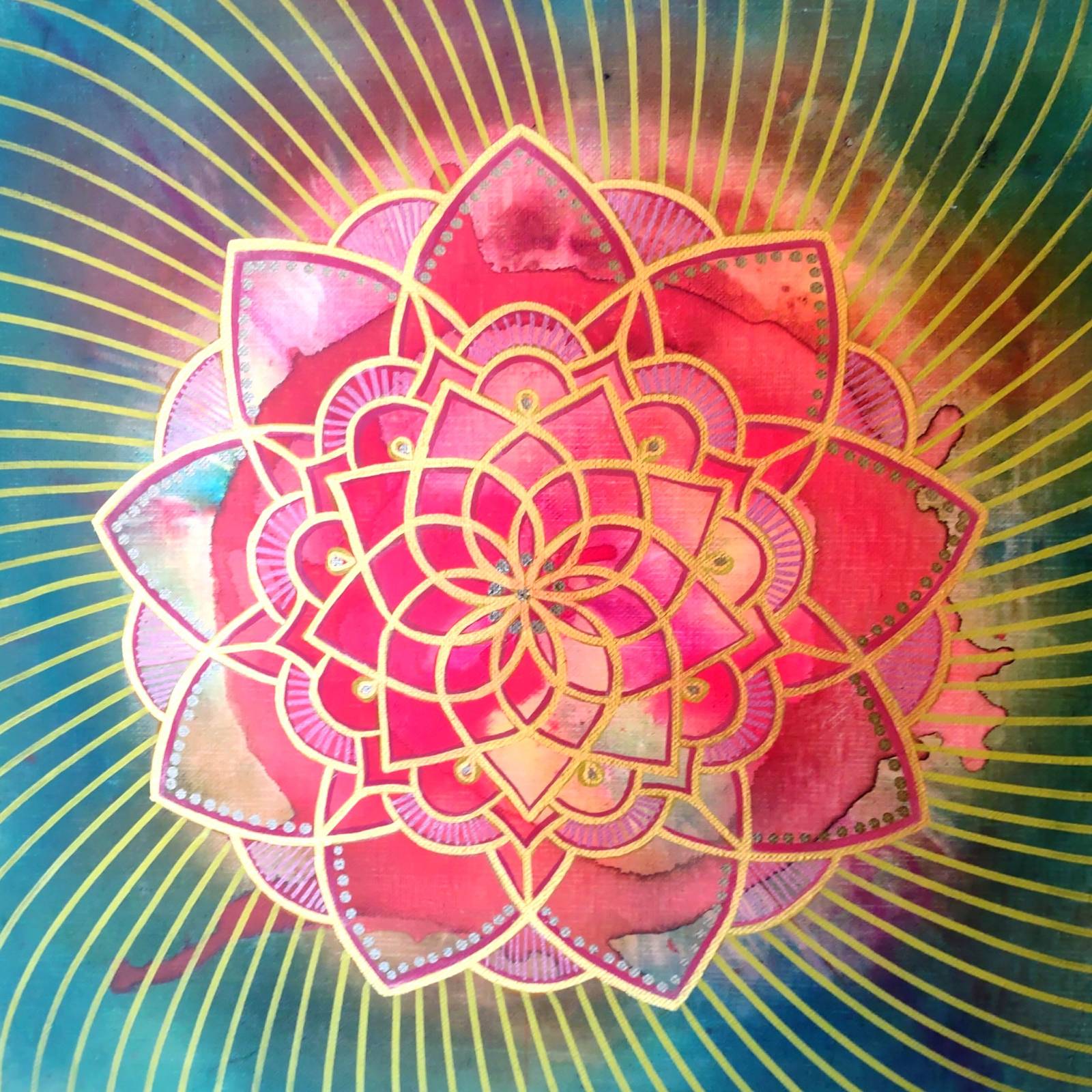
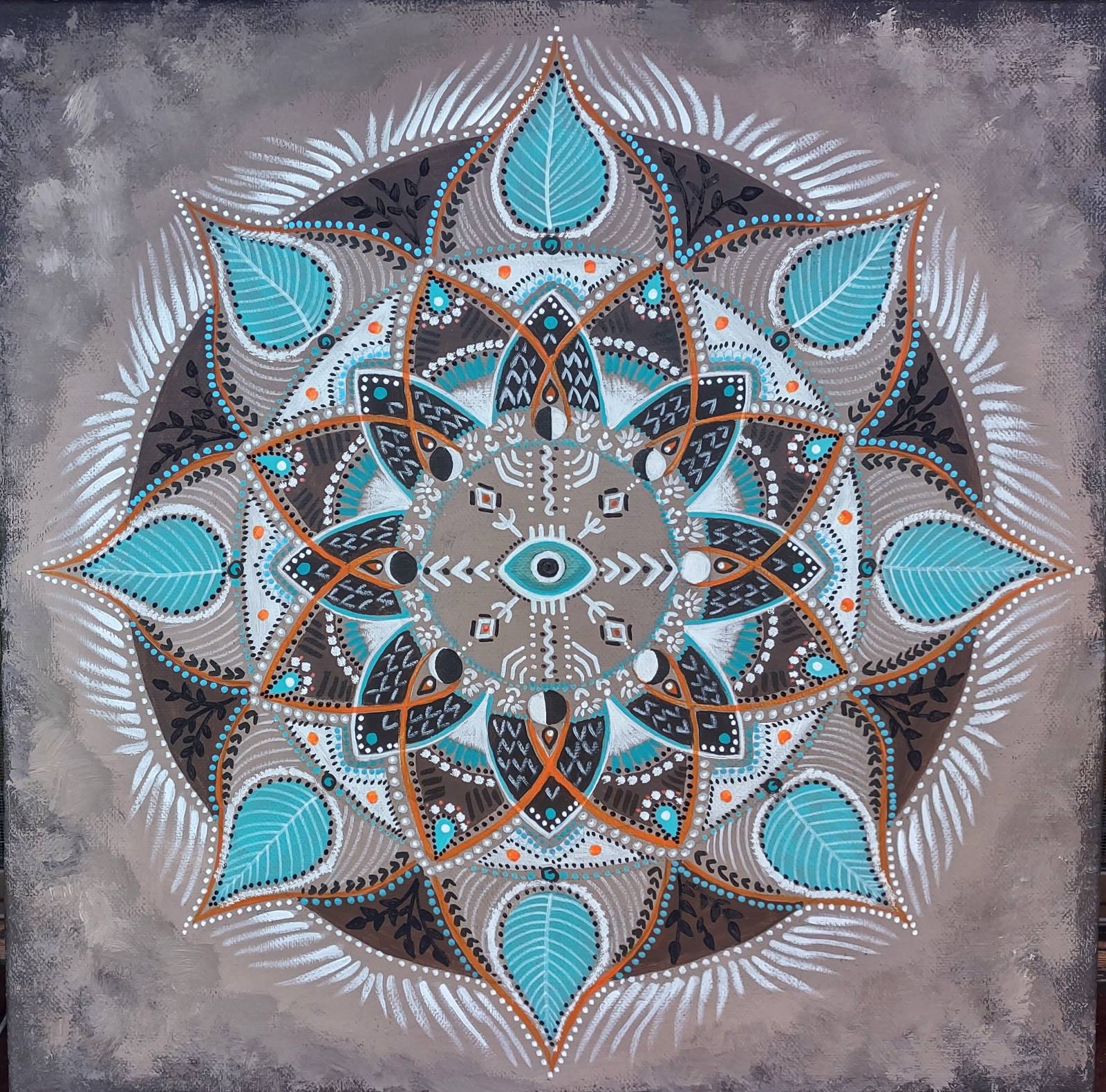
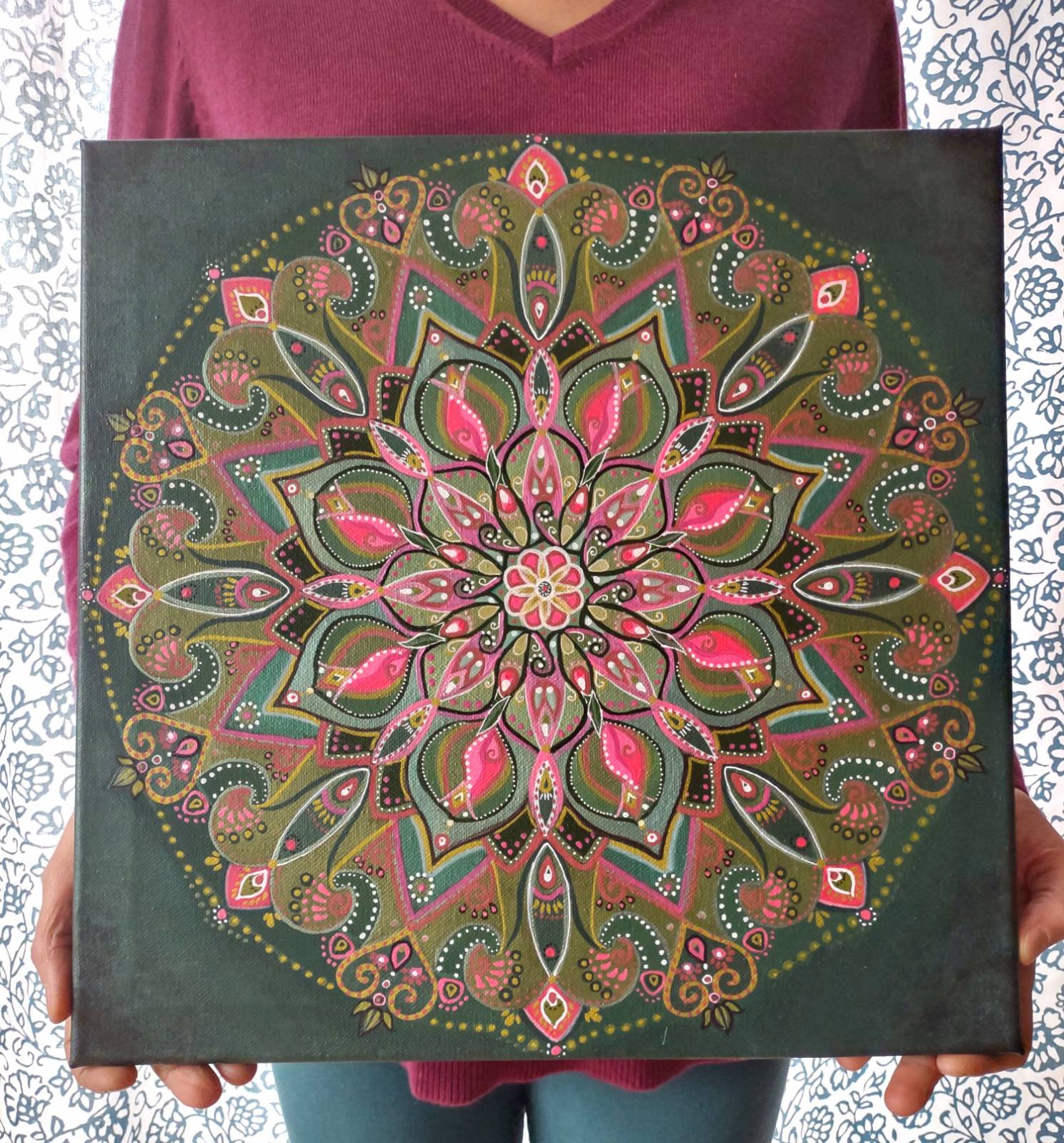
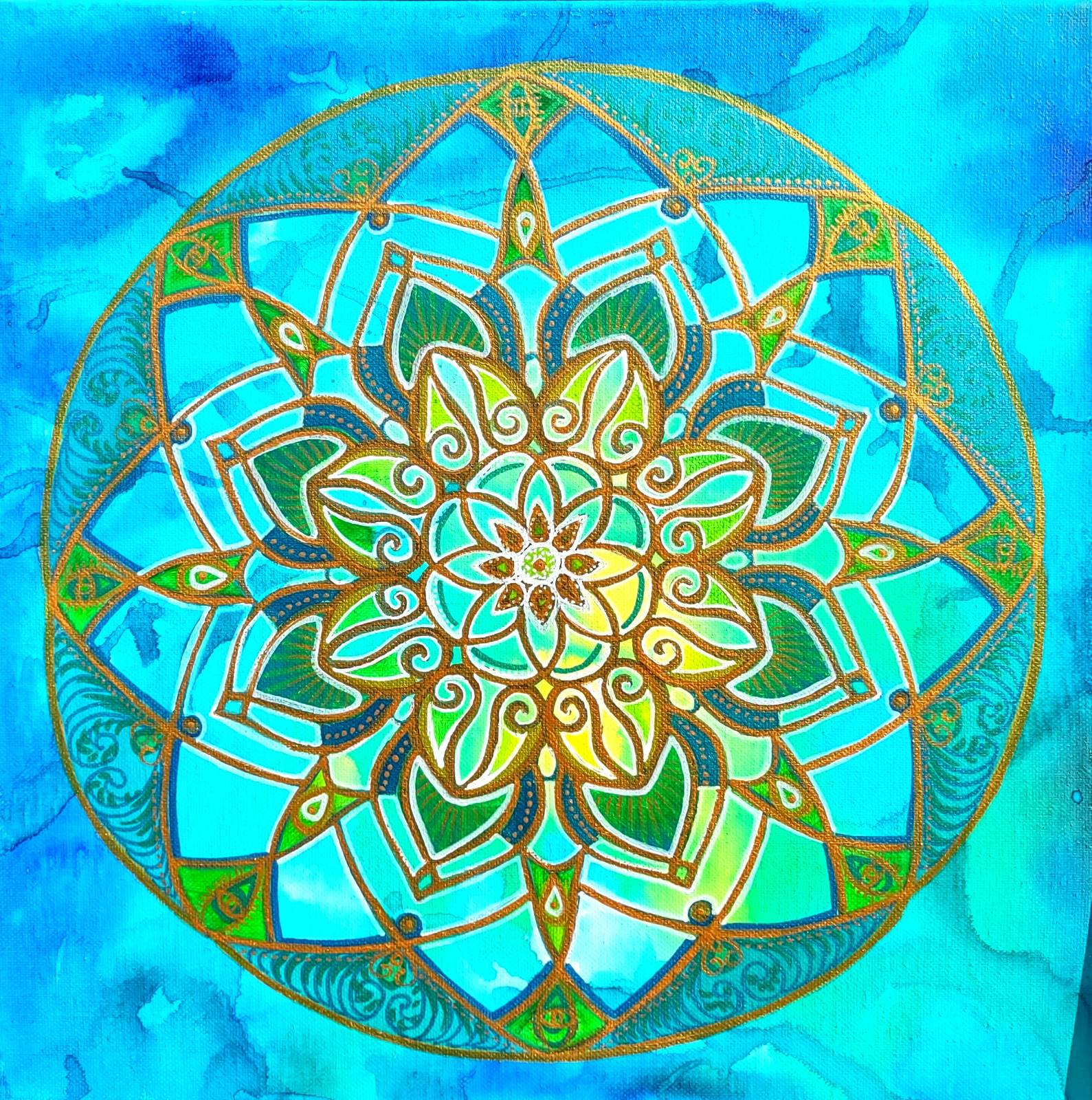
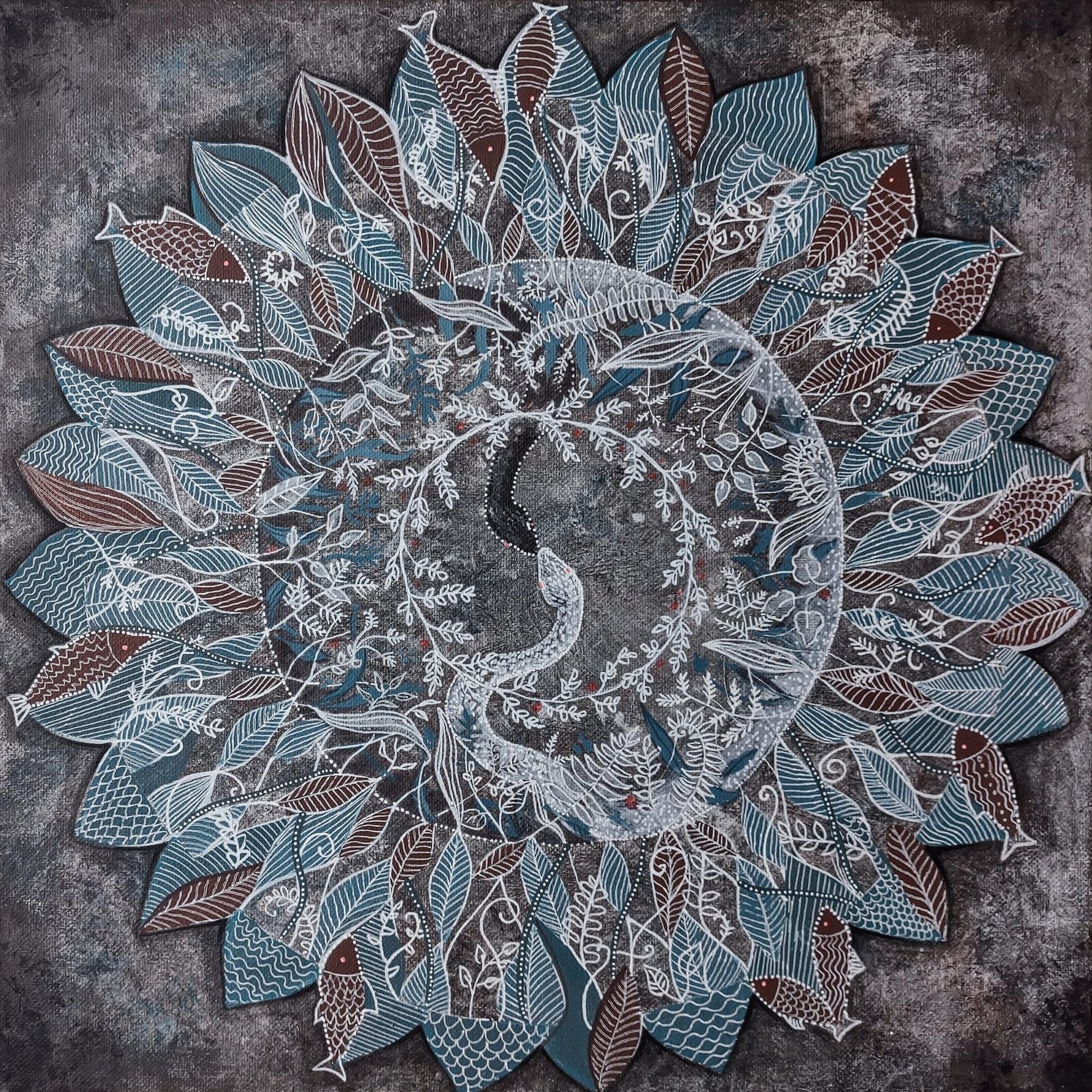
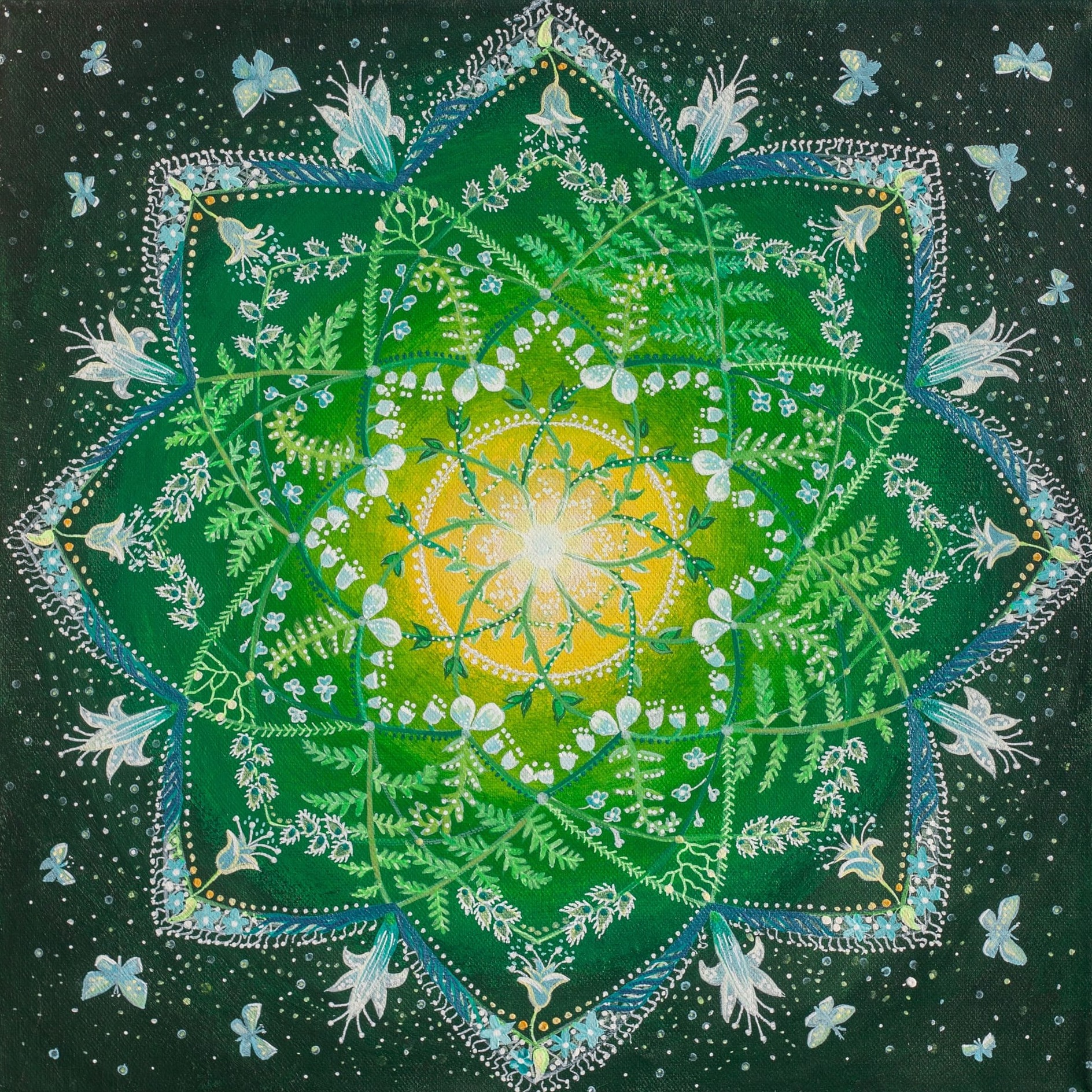
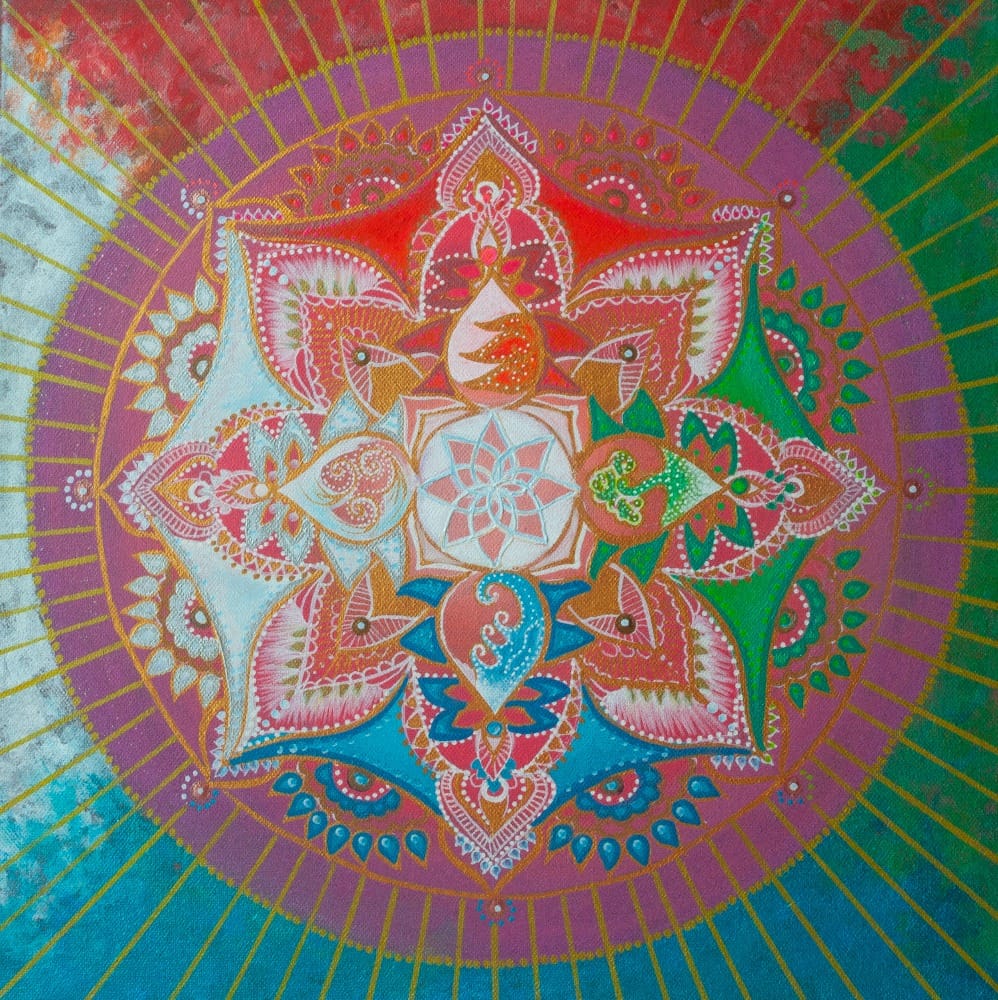
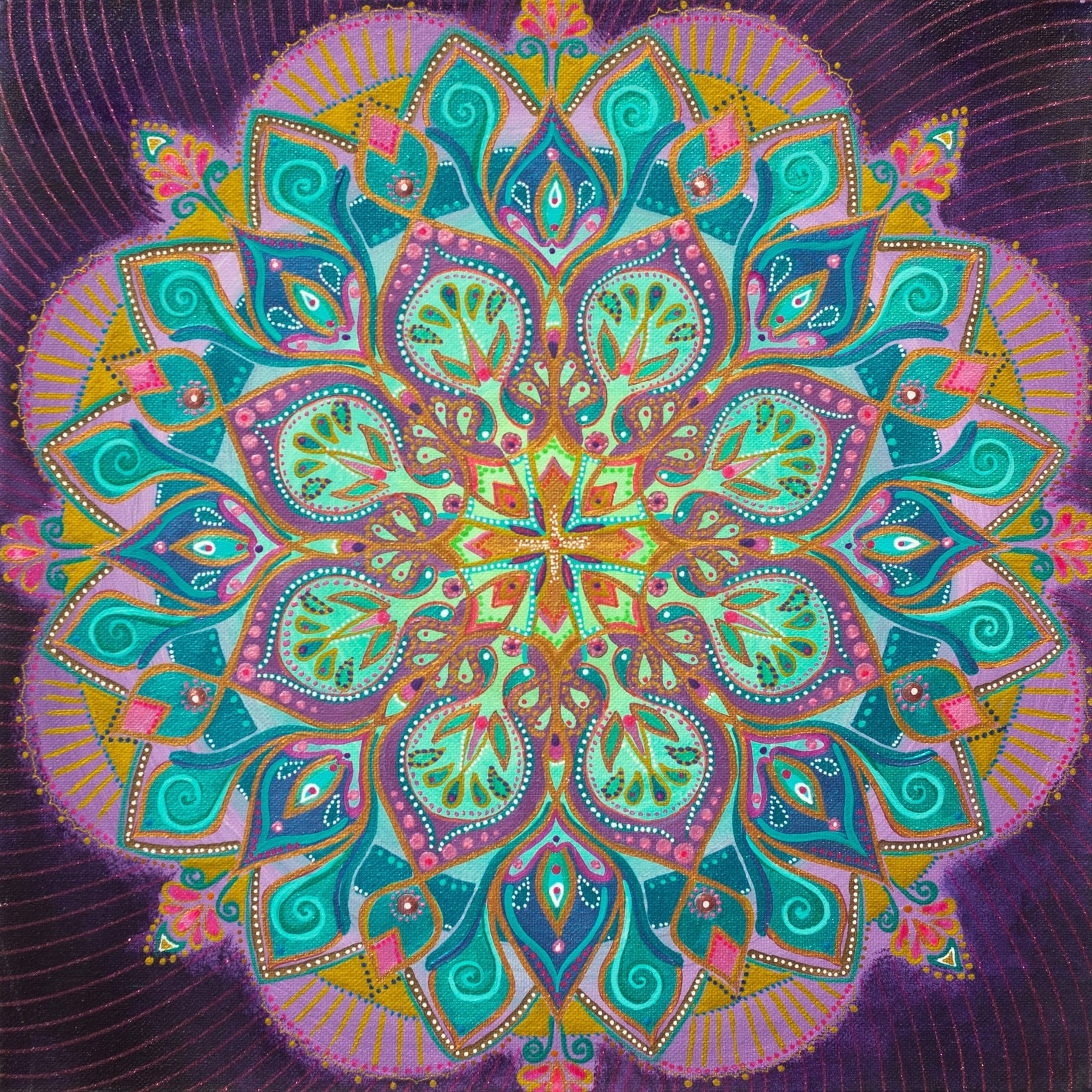
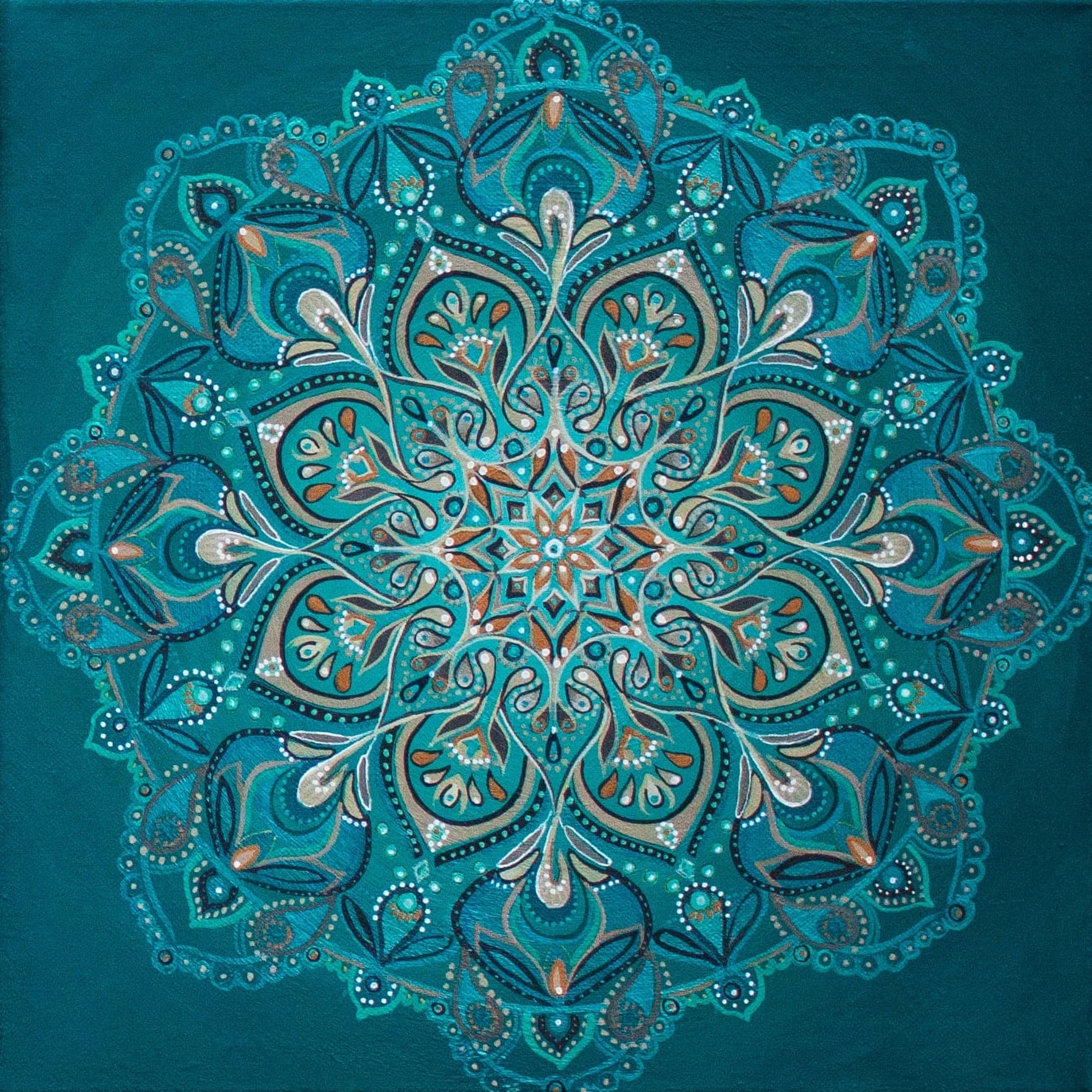
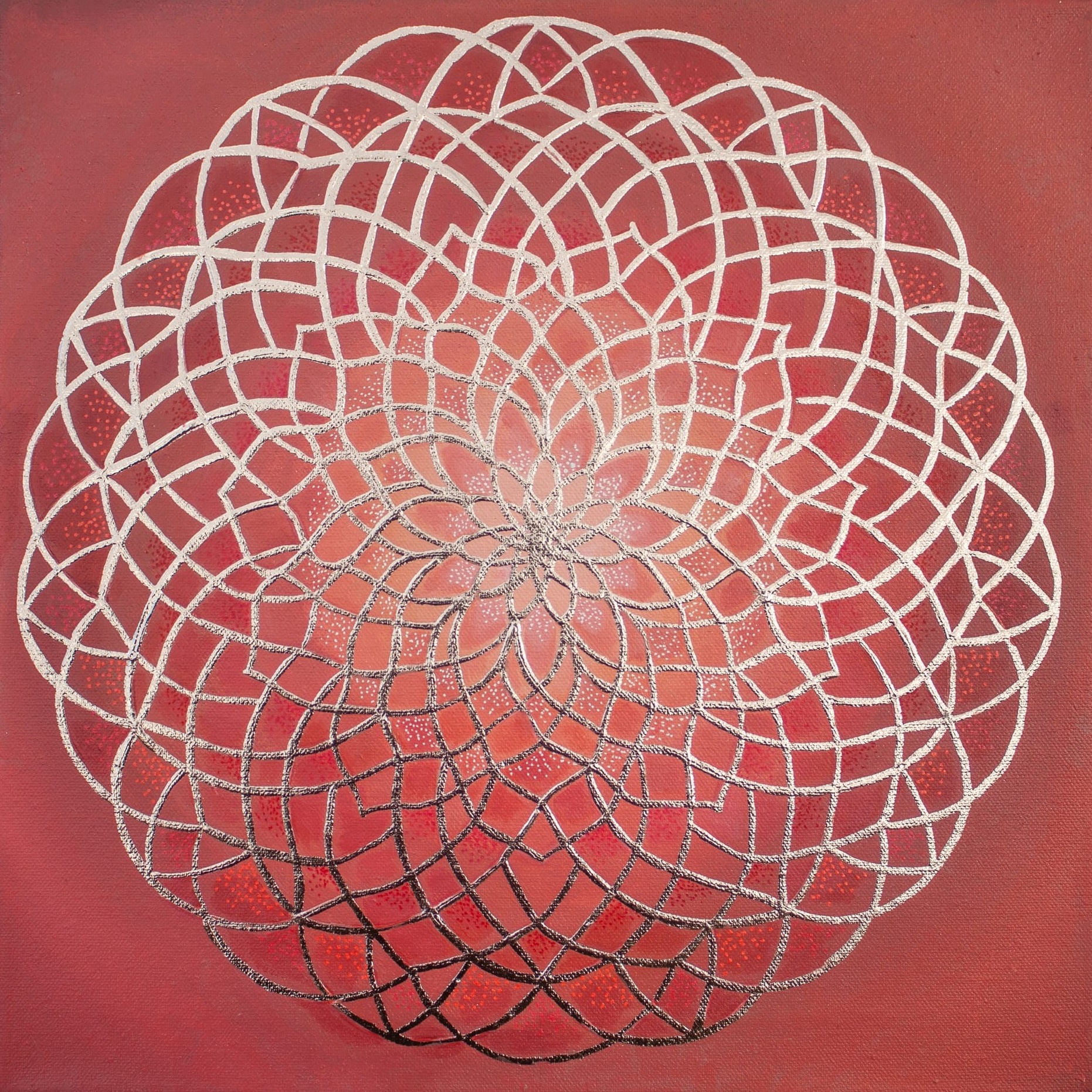
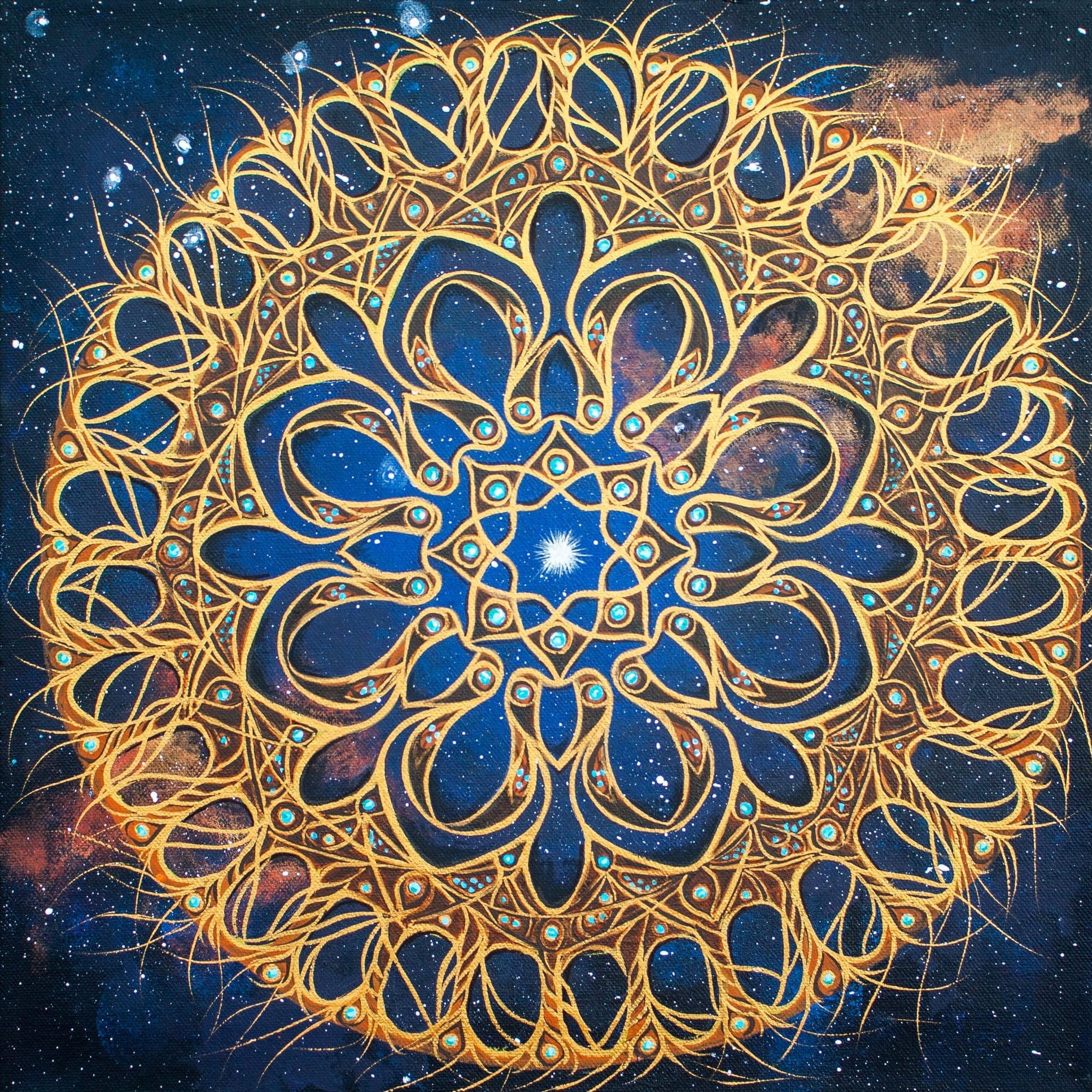
Painting mandalas is a special experience for me. In a sense, it reverses the traditional order of making a picture. In classical painting the artist usually stands in front of the empty rectangle of the canvas and has to make a series of decisions: where to place the main motif, how to distribute the weight of the composition, how to guide the viewer's eye, how to build tension between the elements. They think about proportion, dynamics, balance, the golden ratio, rhythm and the relations between forms. Even when working intuitively, somewhere in the back of their mind remains the conviction that a painting should have a definite structure. That it has to be well planned, that it must be kept under control.
Making a mandala assumes something different.
Its basic form is the circle, and the composition grows around a centre. It seems a small change, yet it fundamentally affects the way of painting. The circle itself creates a kind of order. The centre is a natural point of reference, and everything that appears around it stays in relation to it. So there is no need to keep wondering how to arrange the elements so that the picture is harmonious. There is no need to search for the perfect place for every motif or to control the balance of the whole composition. The centre already exists. It becomes the starting point and, at the same time, the invisible axis around which the picture can unfold.
Perhaps that is why painting mandalas can be so liberating?
I begin in the middle – with a small dot, a stain, a sign, a colour or a simple shape. I don't need to know what will come out in the end. I don't need a ready concept or an idea of what the finished work will look like. The first gesture is enough. Then the next. One shape calls up another, a colour demands an answer, a line leads to the next line. The picture begins to grow in its own rhythm.
I don't focus on building the composition – I follow it.
And that is the remarkable potential of the mandala: it lets you create without constantly controlling the process.
For centuries the circle has been a symbol of fullness, wholeness, cyclicity and order. It has no privileged direction and no clear beginning or end. All its points stand in a similar relation to the centre. Unlike the rectangular canvas, which imposes horizontals and verticals, top and bottom, left and right, the circle creates a more open, less hierarchical space.
In a mandala there is no single right way to develop the composition. You can paint radially, build successive rings, repeat motifs, build asymmetry, introduce a rhythm and abandon it. You can let the picture grow harmoniously, or bring in tension, contrast, unease or apparent chaos. Everything finds its place within the circle.
A mandala offers a safe space to experiment. I don't need to know where I am going. I can allow myself uncertainty, spontaneity, a moment of being lost. Even if an element appears that seems not to fit, I don't have to correct it at once. Perhaps it will become the beginning of something new. Perhaps the picture will find a place for it that I could not have foreseen.
In this way the mandala teaches me to trust the process.
The particular significance of the mandala for self-knowledge was recognised by Carl Gustav Jung. His interest in these forms did not come only from his fascination with Eastern symbolism. Jung discovered that mandalas appeared spontaneously in his own drawings and in the work of some of his patients, especially in periods of intense psychological change.
He noticed that people going through inner chaos, conflicts, crises or difficult moments in life sometimes began to make pictures with a centred composition: circles, radial arrangements, symmetrical figures, structures resembling flowers, rosettes or geometric diagrams. Importantly, these were not always people who knew anything about mandalas. They did not need to know their religious or cultural meaning. Yet their hands spontaneously produced forms that resembled mandalas known from many traditions around the world.
Jung interpreted this phenomenon as the work of the unconscious, which in moments of inner instability may strive to find a new order. In his psychology the mandala became one of the most important symbols of the Self – the archetypal image of psychic wholeness, embracing both the conscious and the unconscious.
In his work Jung pointed out that the spontaneous creation of mandalas can accompany the process of individuation – of gradually becoming oneself. In this process a person gradually integrates different, often contradictory aspects of their own personality. In his memoirs Jung also described how he regularly drew mandalas himself, treating them as a record of his inner state. He noticed that successive images allowed him to see the changes taking place in his psyche.
When we paint a mandala, we may unconsciously reveal content that would be hard to reach through ordinary reflection. The conscious mind has its habits, limitations and mechanisms of control. We know which colours we like, which shapes we find beautiful, which images fit our idea of ourselves. We often repeat the same aesthetic solutions because they give us a sense of safety.
Spontaneous painting, however, can be very surprising.
Suddenly I choose a colour I usually avoid. I bring into the picture a sharp, unsettling form, quite unlike the ones I normally make. I fill the space with dense ornament – I love it and use it often, because the time spent making intricate patterns, tangles of lines, lace or other precise decorative motifs lets me slowly enter the process and stay in it for long, long hours. Symbols and motifs appear that resemble flowers, animals, eyes, suns, spirals, labyrinths, cracks or closed structures.
Then I stop and ask myself: why exactly this way?
Of course one should not assume that every colour or shape has a universal, unambiguous meaning. The meaning of a picture is very personal and depends on the painter's individual associations, experiences and current situation in life.
That is why it is important not to interpret a mandala according to a ready-made dictionary of symbols. It is far more interesting to observe one's own reactions.
What do I feel when I look at the centre of my mandala? Do I feel good among the colours I have chosen? Would I like to change something, or would I rather leave the picture as it is? Which part draws my attention? Which part irritates me? Is there something in it I cannot accept?
It may turn out that the mandala shows us something we had not noticed before. It then becomes not only a picture but also a mirror of emotions and inner beliefs.
You could say that painting a mandala reverses the usual direction of self-knowledge. Instead of first understanding what I feel and then consciously painting it, I paint first and only later try to understand what actually happened.
For me it is the most interesting way so far of getting to know myself through action, experience and observation.
I also keep encouraging and inviting others to my workshops to paint, draw – to create their own mandalas.
Workshop participants confirm that making mandalas is absorbing and calming, and brings relief in moments of emotional turmoil.
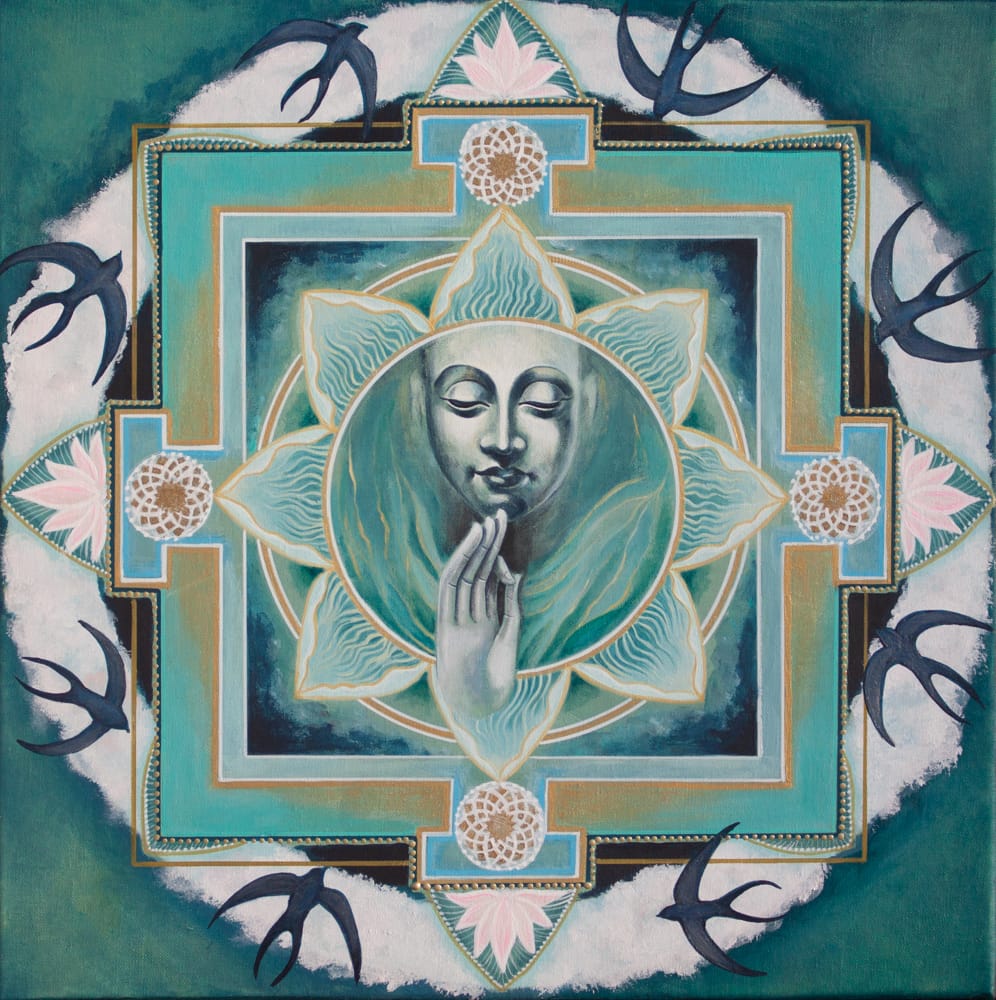
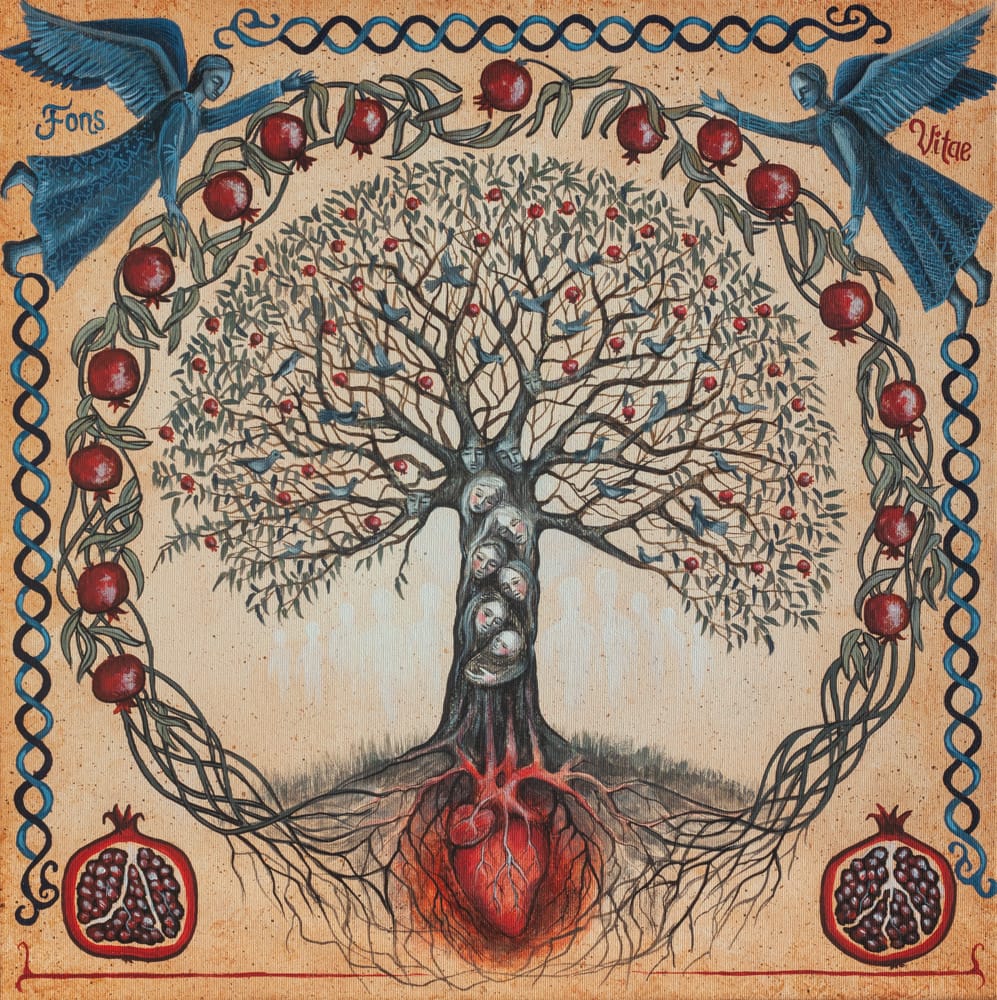
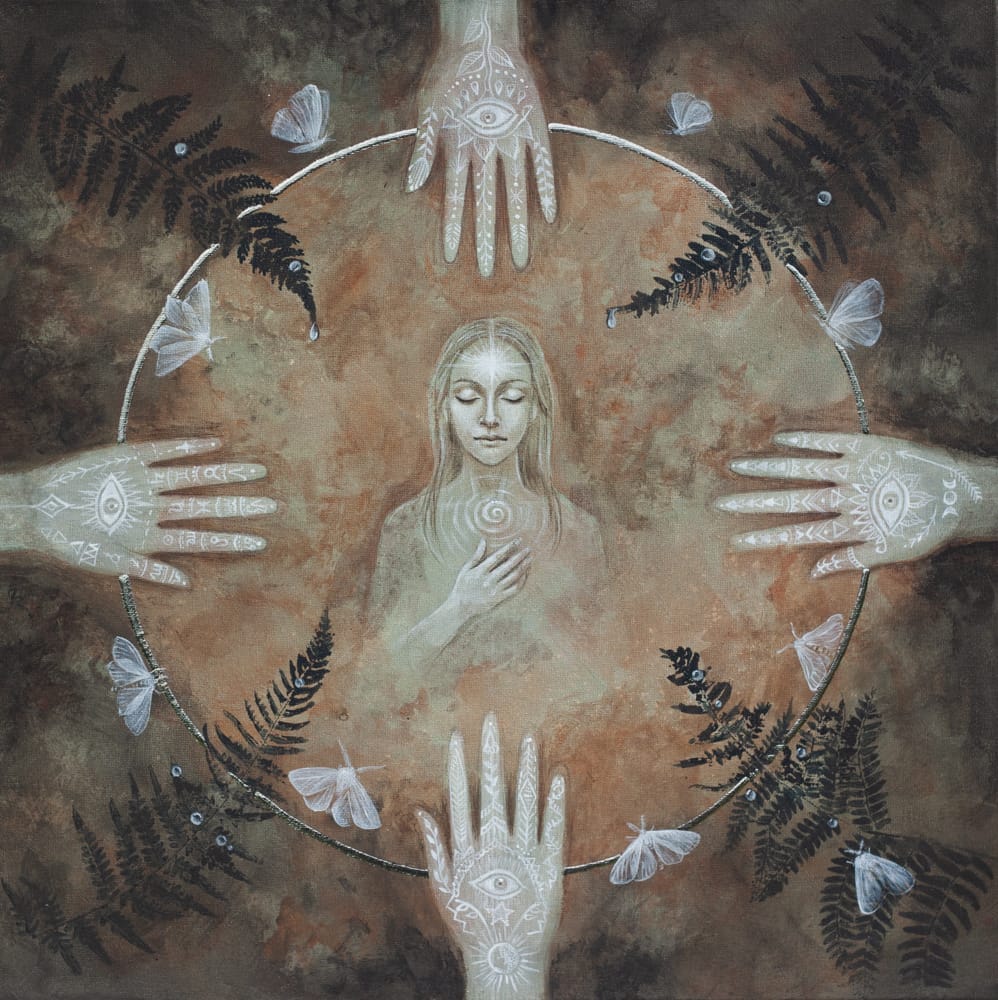
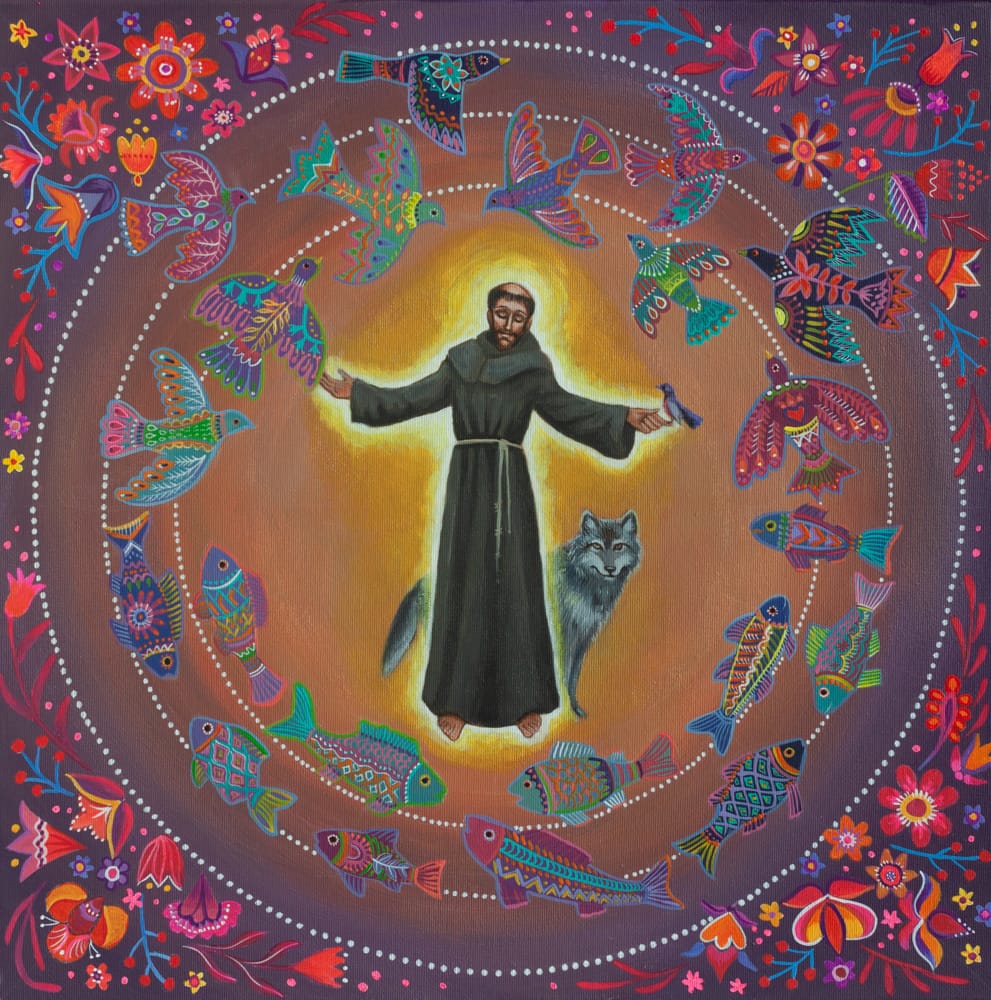
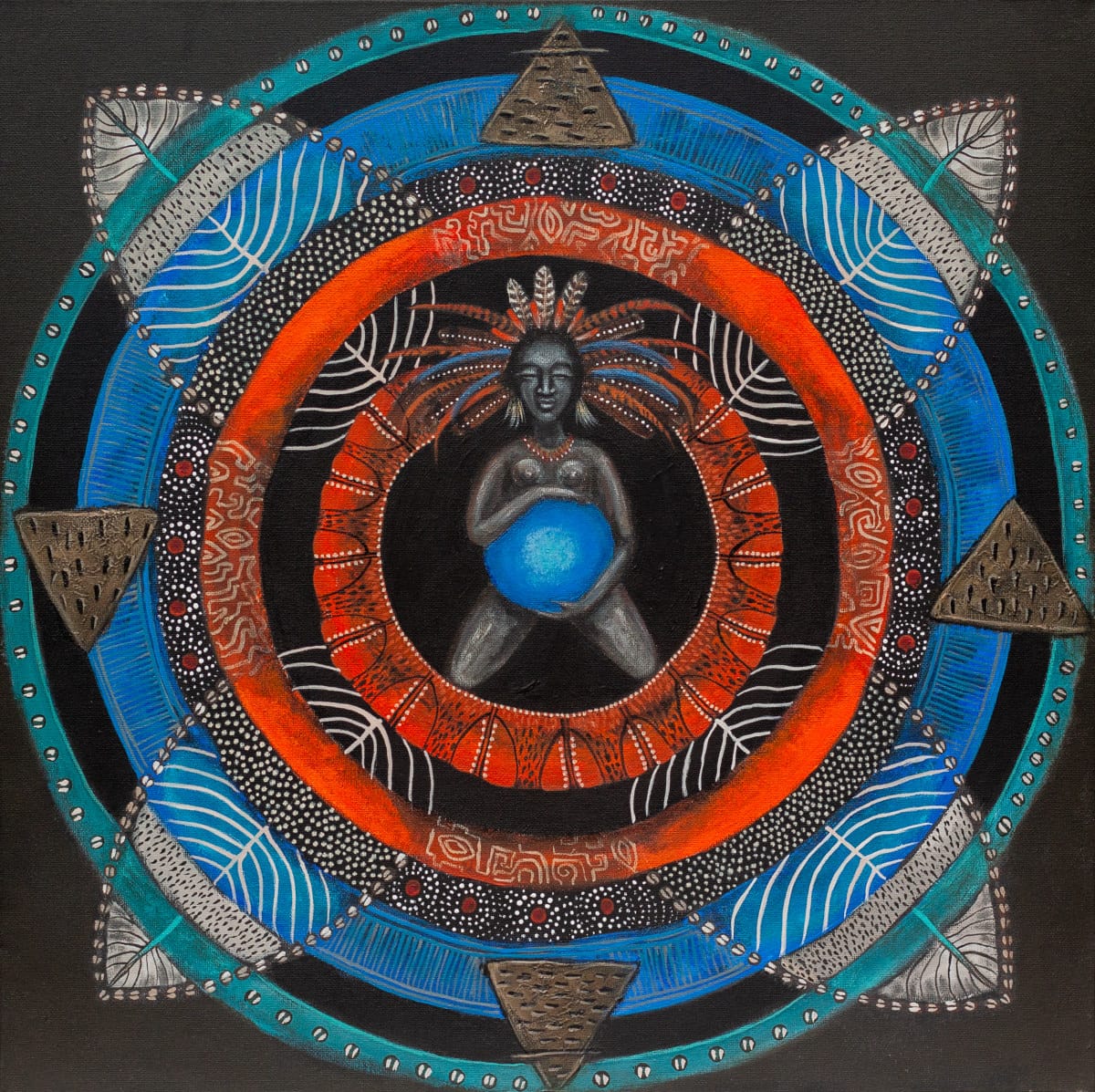
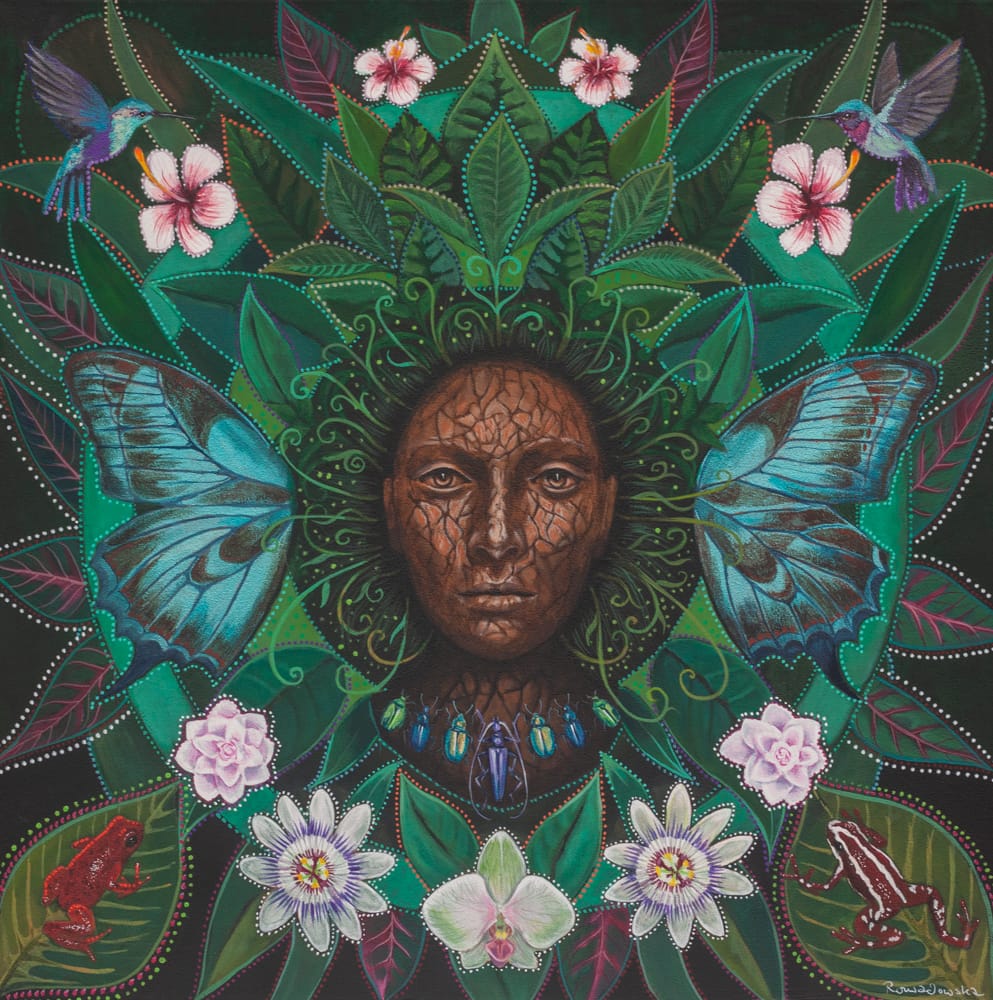
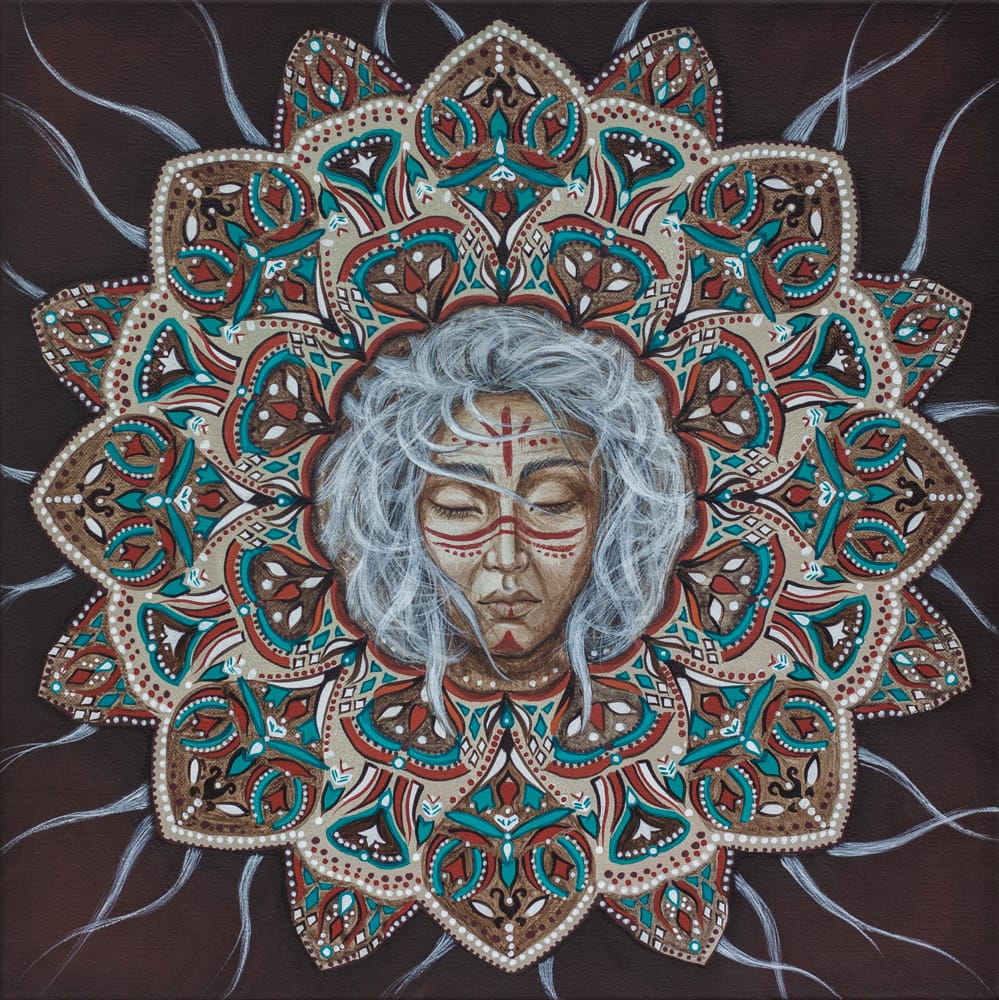
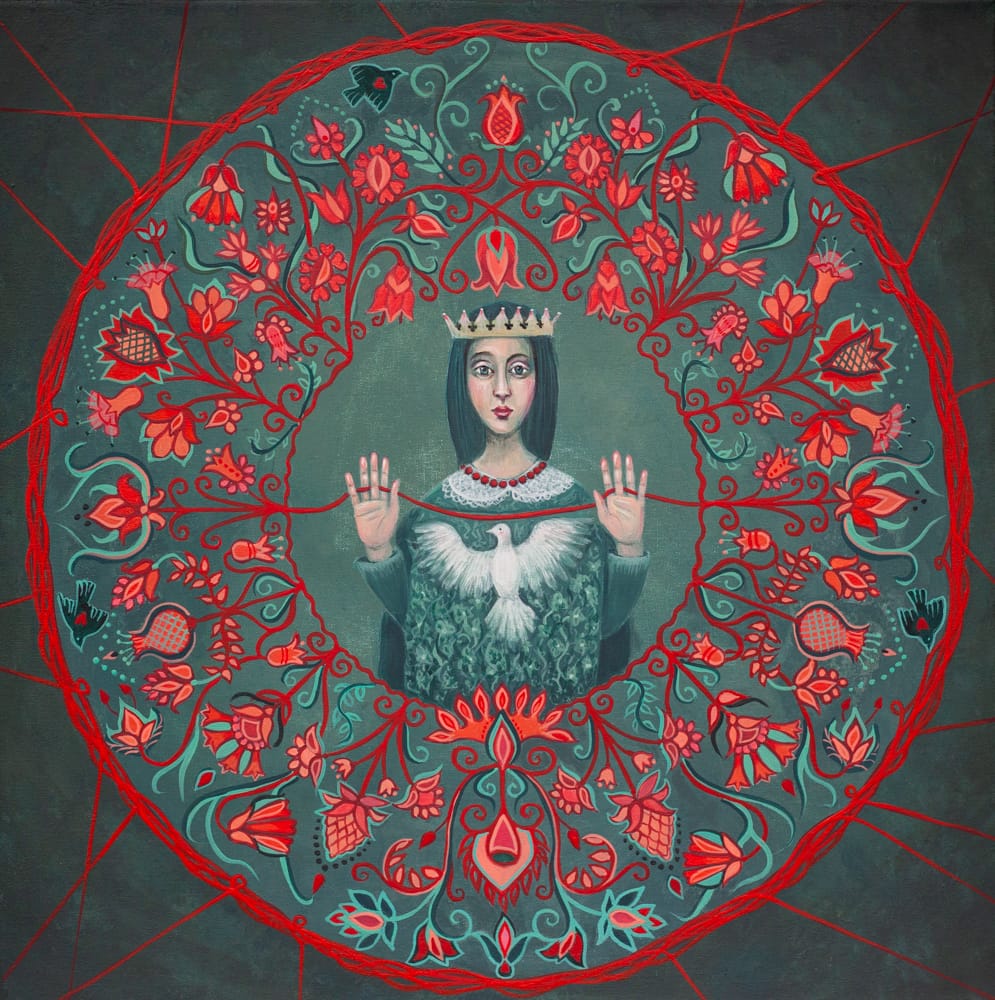
If you don't have the time or the wish to make your own pictures – you are welcome to spend time with my paintings. Meditating with a mandala can also bring very interesting effects, especially with pictures in which something makes you stop. It doesn't always have to be delight 🙂 Perhaps sometimes it is worth staying with something that unsettles you, makes you wonder, 'catches' or irritates you?
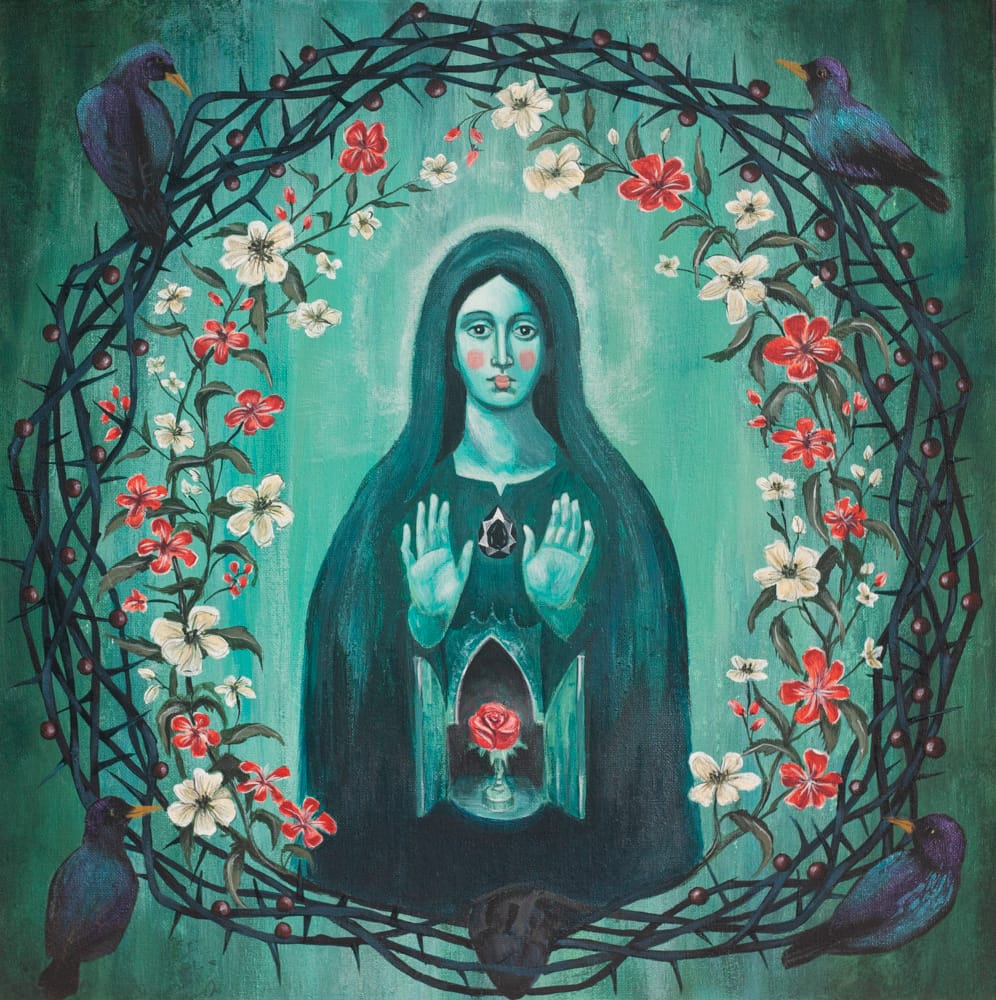
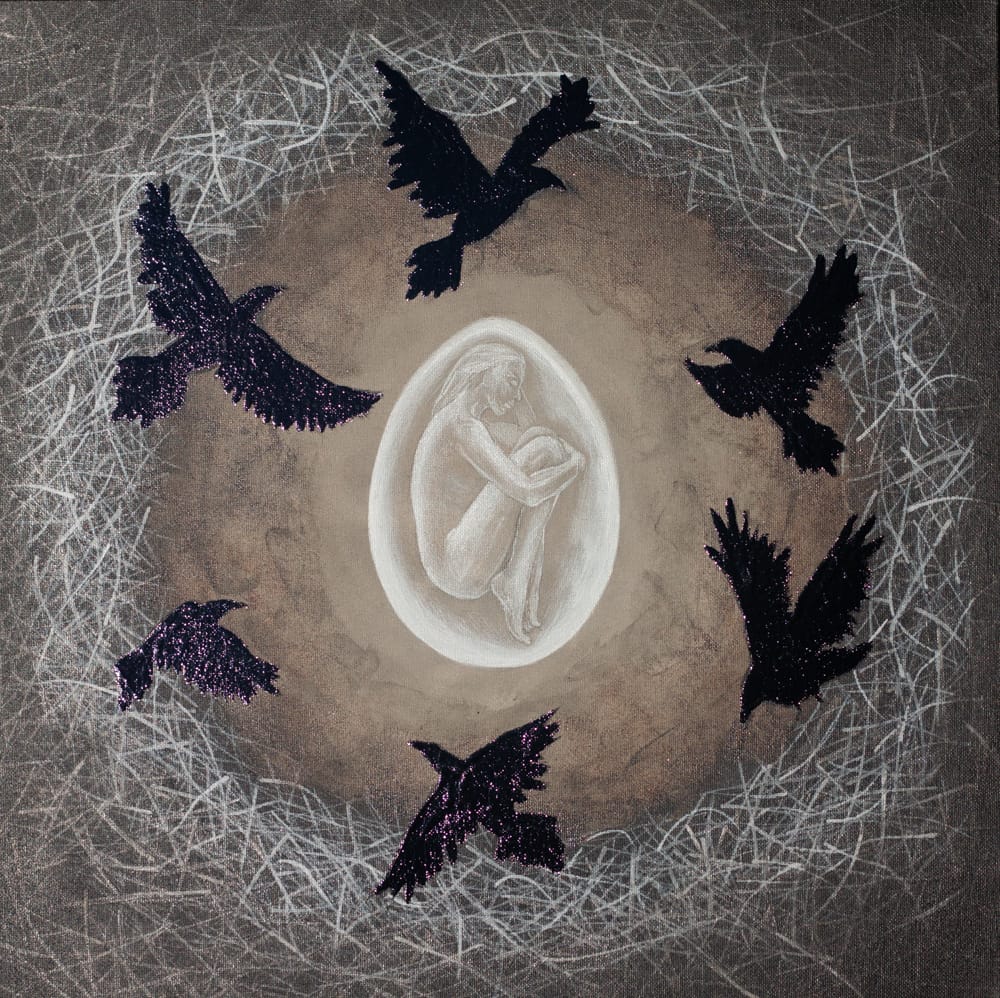
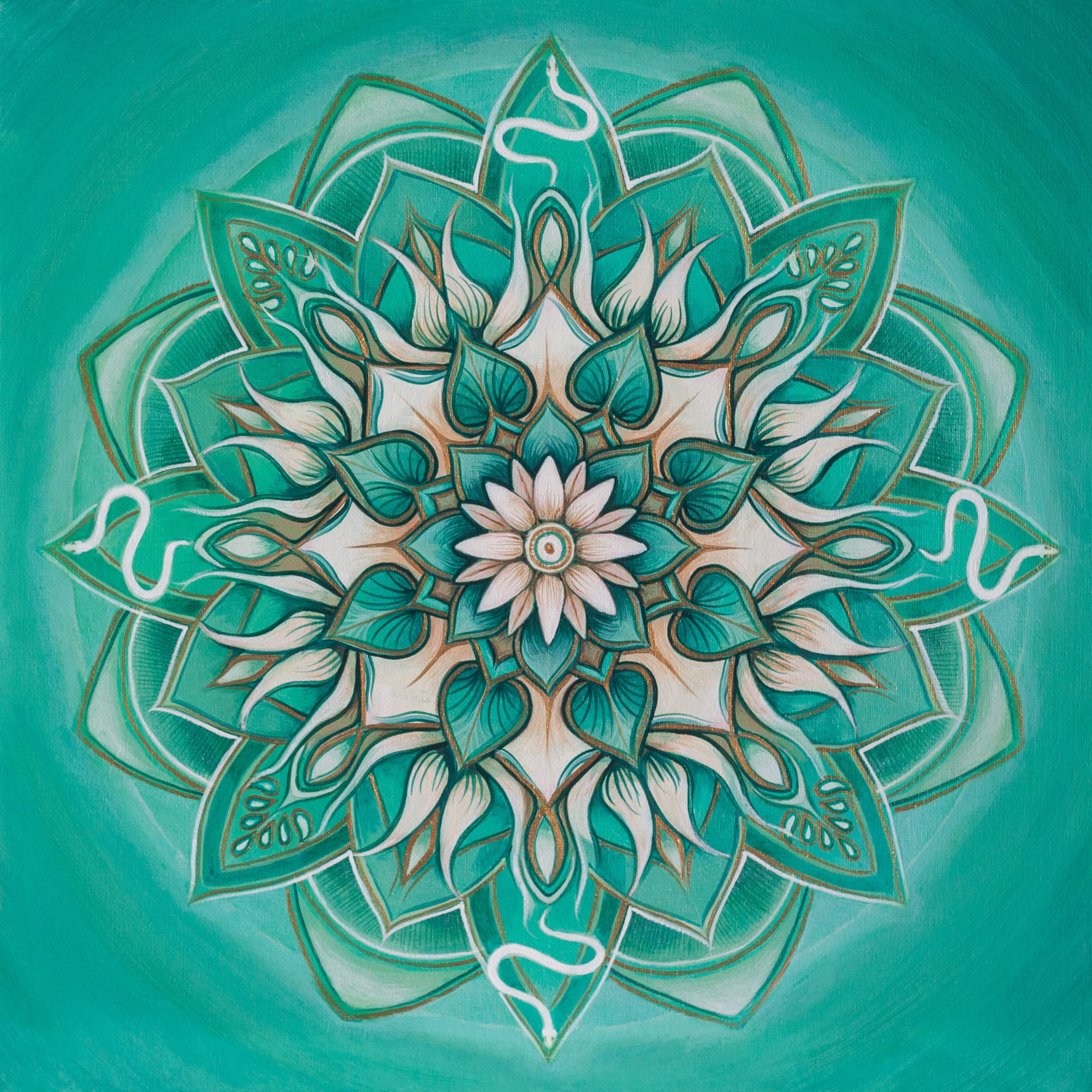
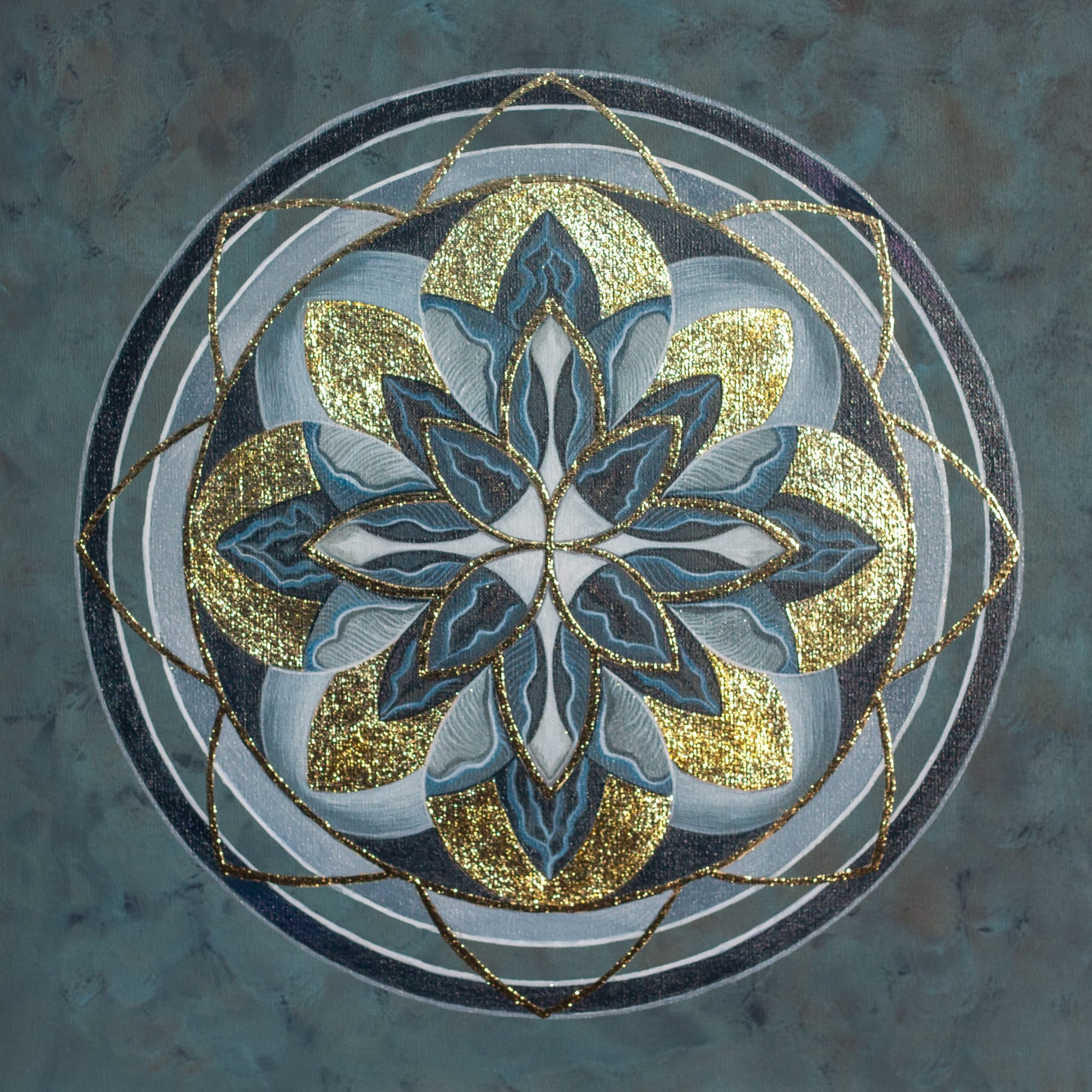
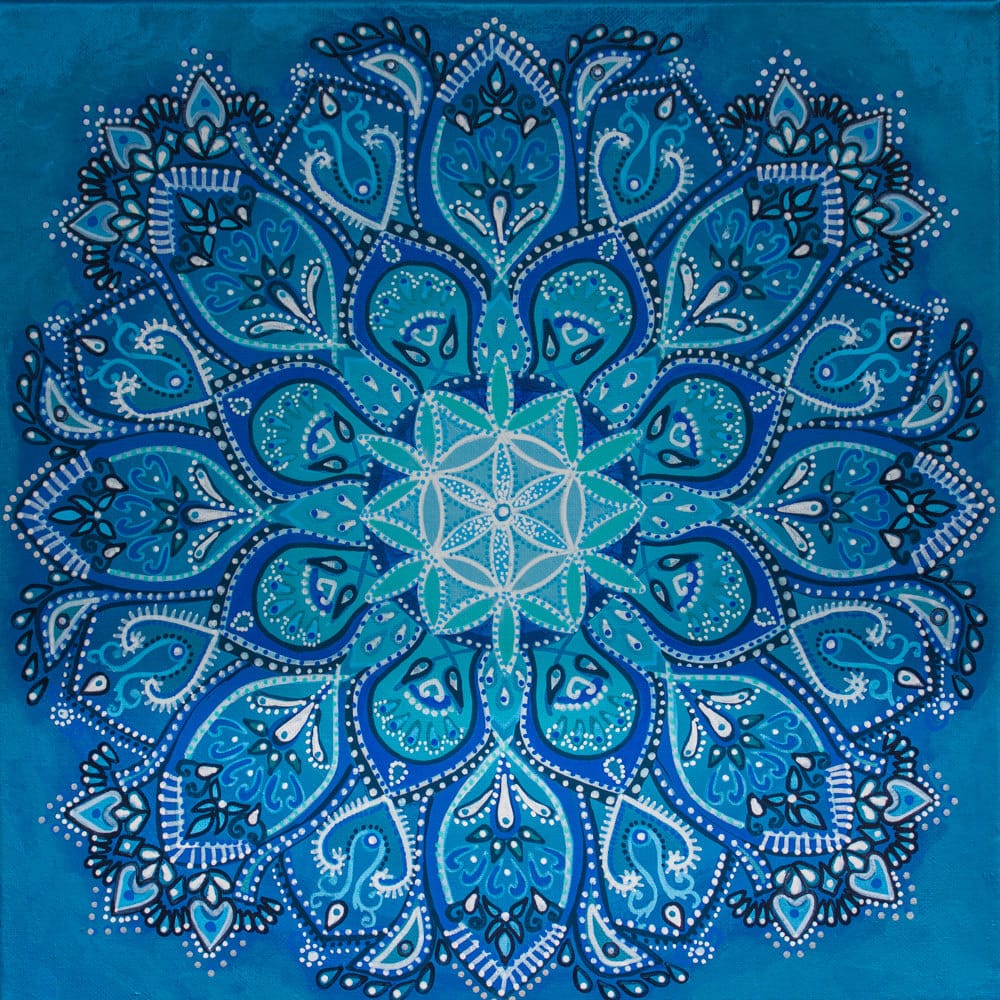
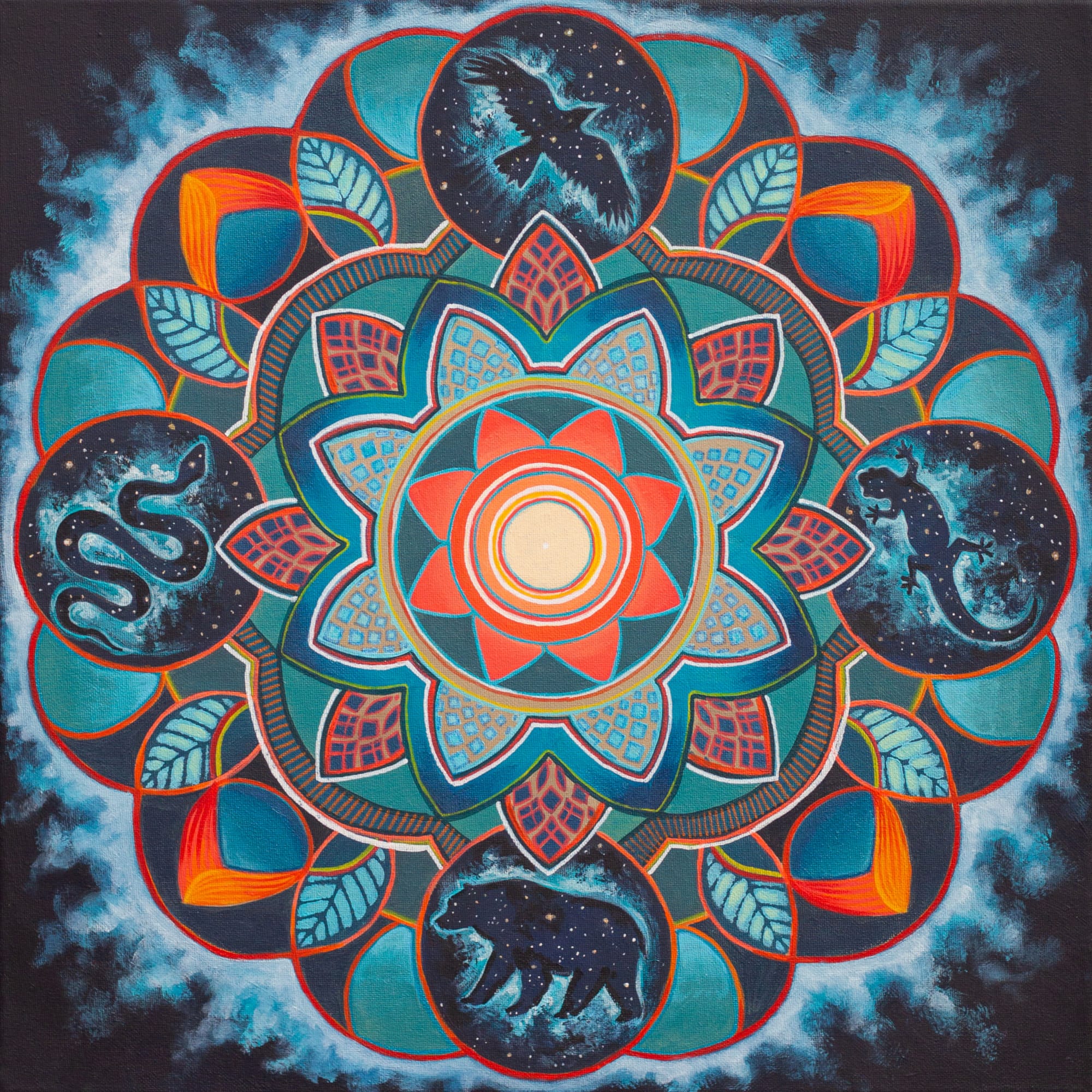
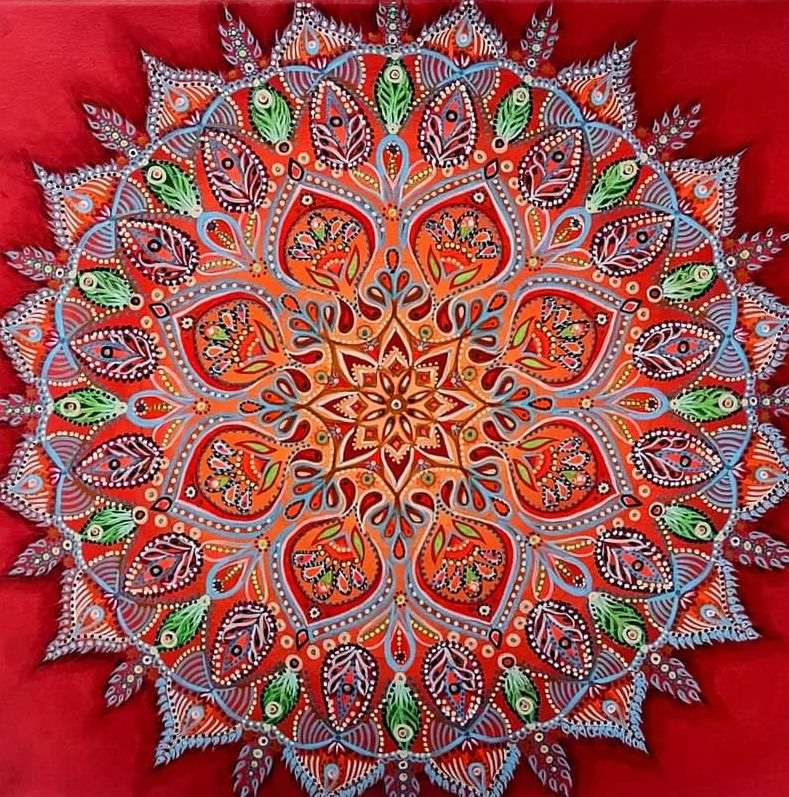
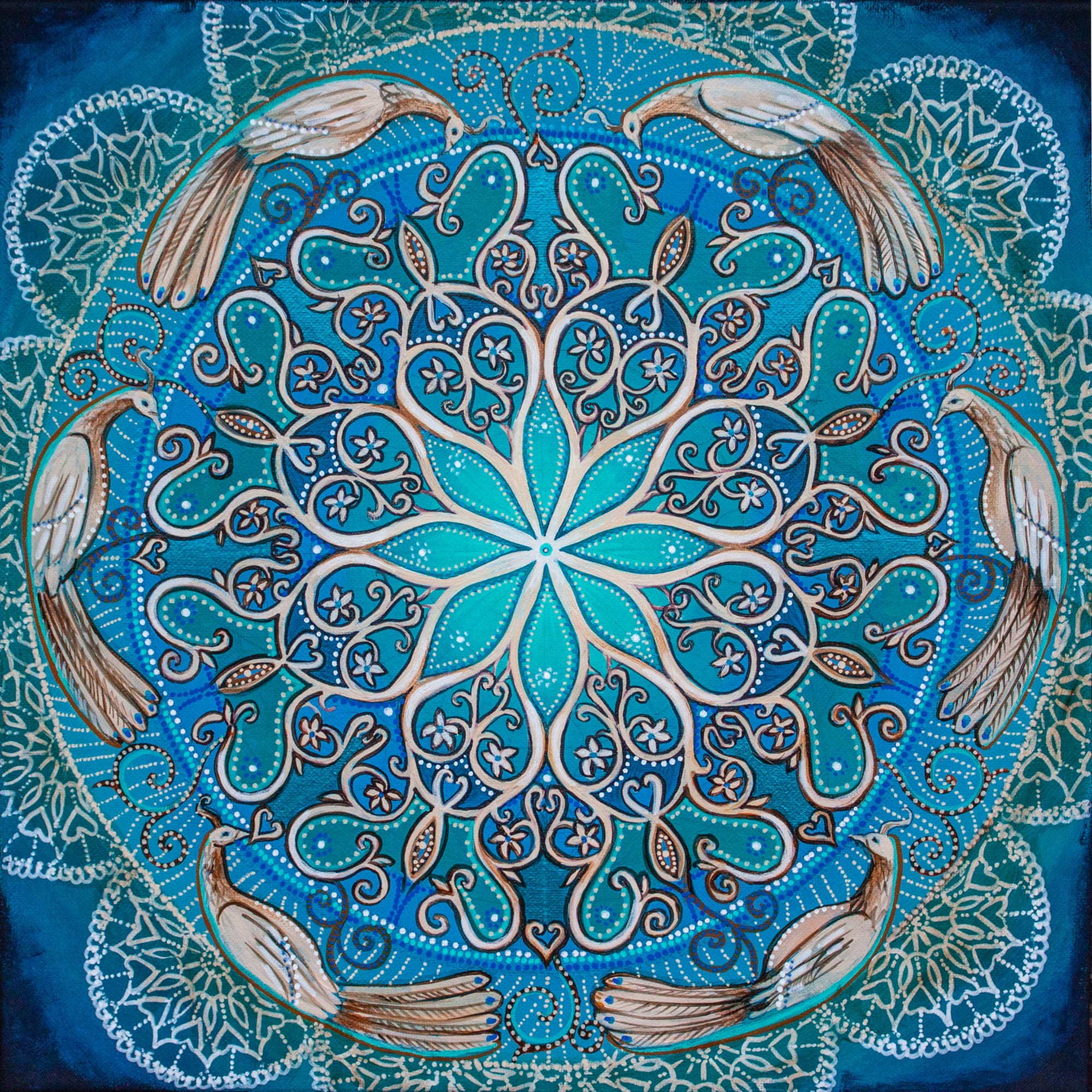
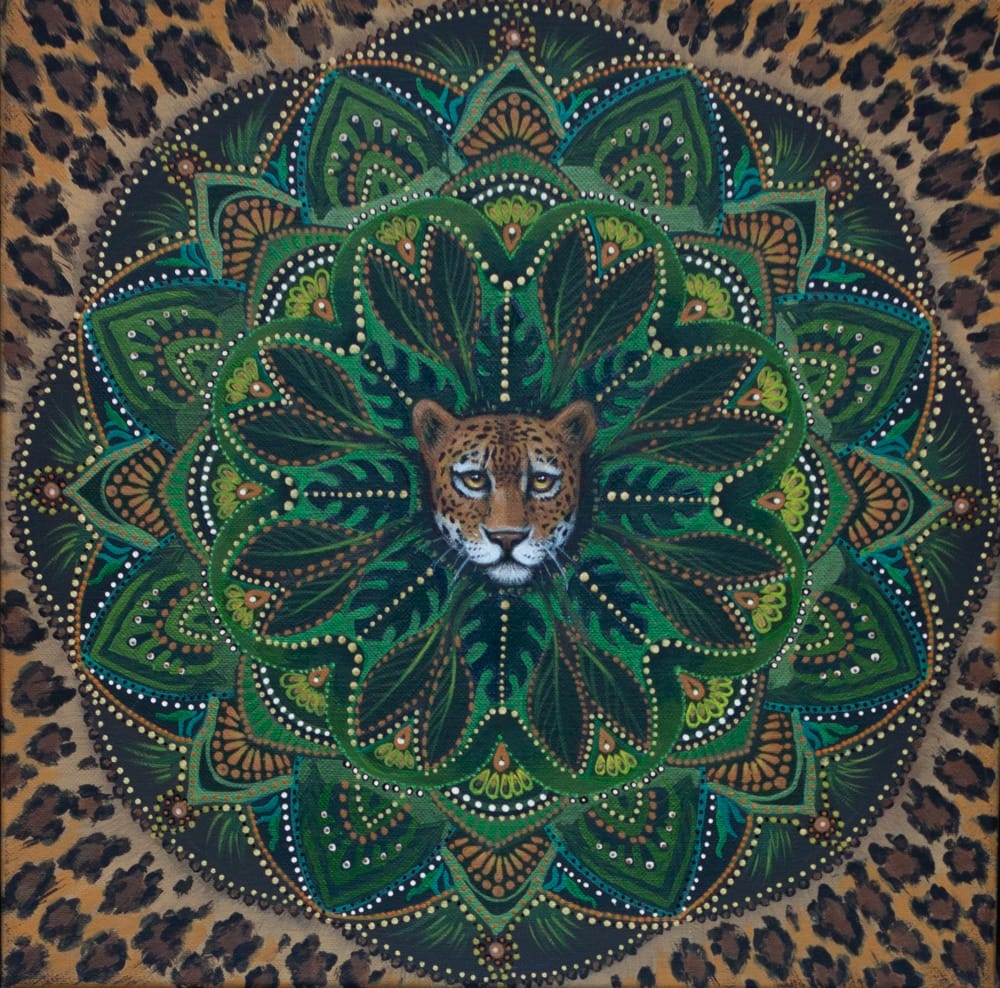
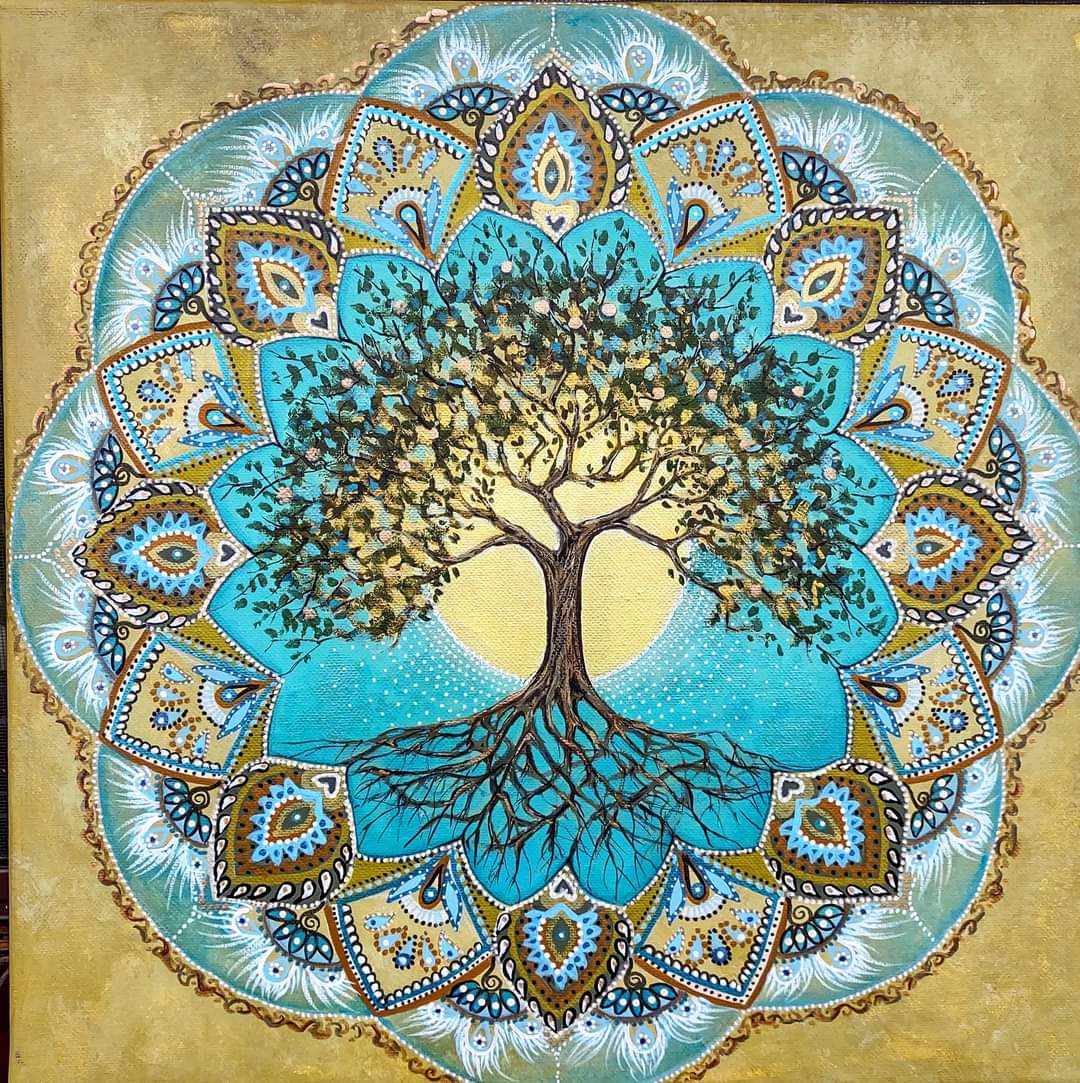
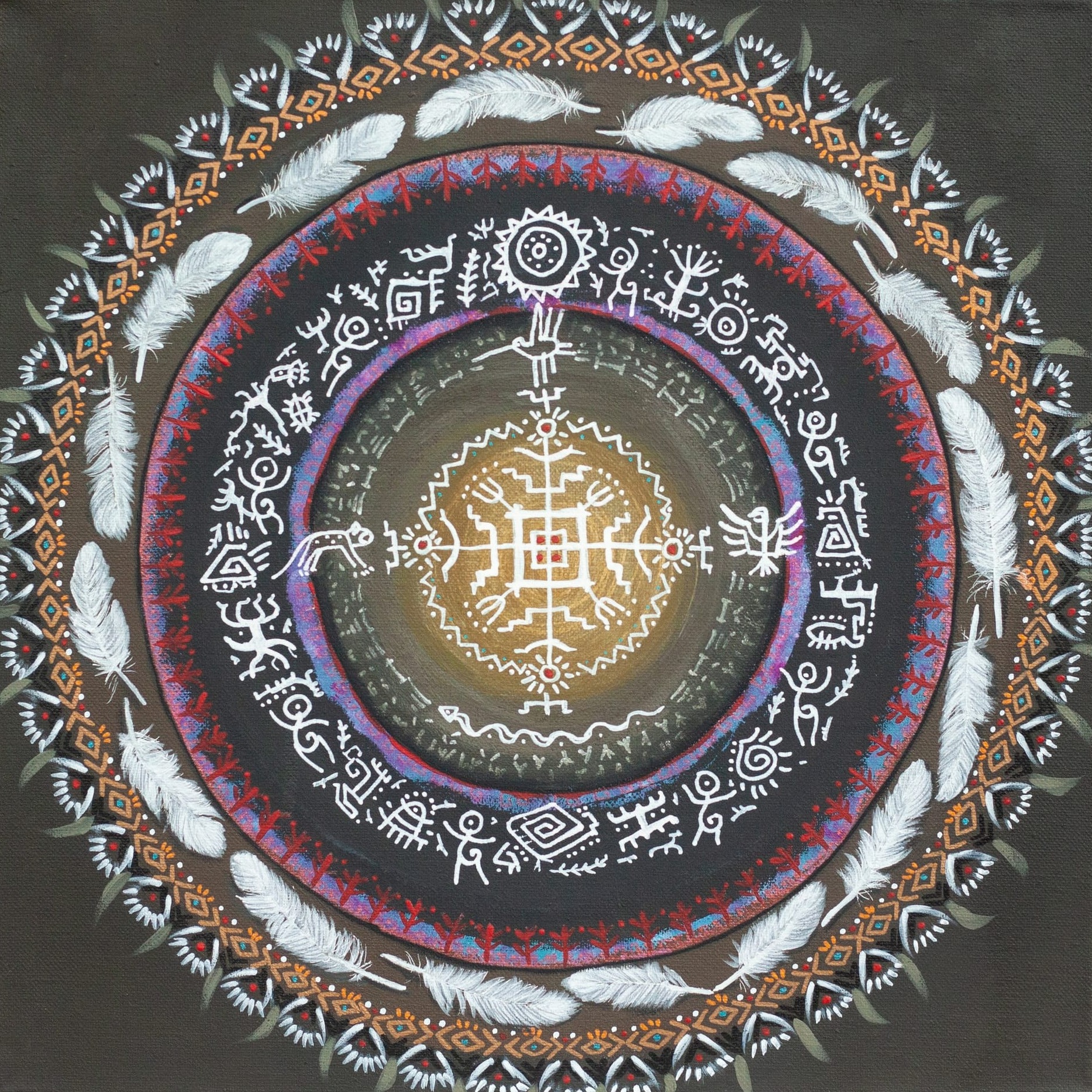
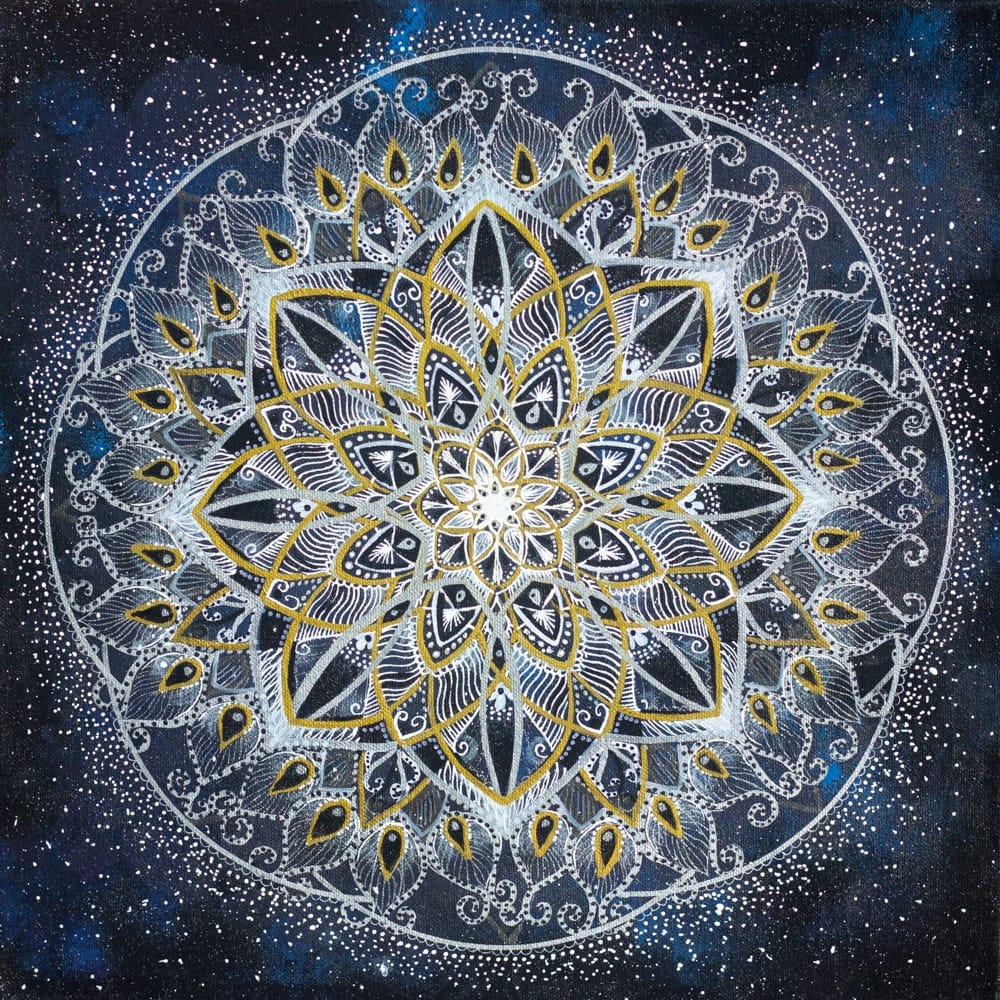
All the mandalas presented here can be ordered and bought, as originals or as reproductions.